
- This topic is empty.
-
AuthorPosts
-
2026-05-22 at 10:16 am #6808
In most industrial pumping systems, sealing performance is only noticed when it fails. Until that moment, the mechanical seal is often treated as a standard component rather than a critical reliability driver. Yet in real-world operations—whether in water circulation, chemical transfer, HVAC systems, or light industrial fluid handling—the sealing interface is one of the most sensitive and failure-prone points in rotating equipment.
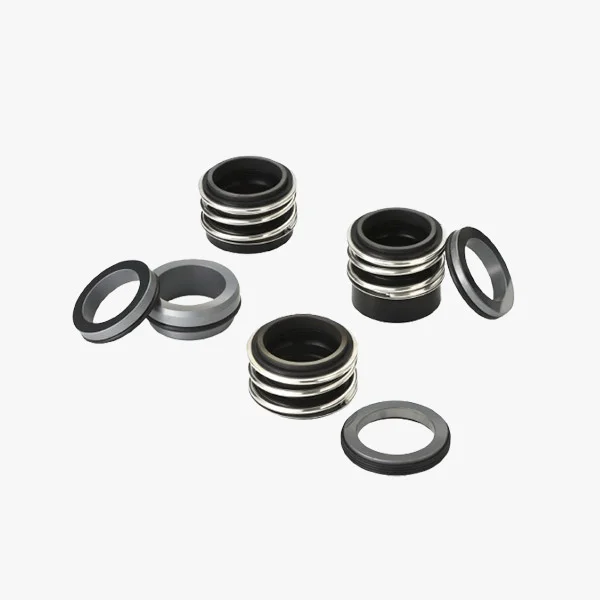
The MG1 mechanical seal has become a widely adopted solution in these applications because it offers a compact elastomer bellows structure, relatively stable sealing performance, and compatibility with a broad range of pump configurations. However, its true value is not defined by the product itself, but by how well it matches operating conditions across the full lifecycle of the pump system.
To understand why MG1 seals succeed in some systems and fail prematurely in others, it is more useful to view sealing performance as a progression of interacting factors rather than a static specification.
Sealing Failure Rarely Starts at the Seal Face
In many industrial pumps, seal failure is often attributed directly to the mechanical seal itself. In reality, the root cause frequently originates elsewhere in the system.
A typical MG1 mechanical seal operates in a dynamic environment where shaft rotation, hydraulic pressure, thermal variation, and vibration continuously interact. Even small deviations in pump alignment or operating conditions can gradually alter sealing face contact pressure.
At the early stage of operation, the seal may perform within acceptable limits. However, as operating hours accumulate, secondary effects begin to appear. Shaft deflection under load, minor cavitation events, or inconsistent lubrication conditions can slowly change the mechanical balance of the seal interface.
Once this balance is disturbed, friction increases at the sealing faces. That friction generates localized heat, which then accelerates elastomer aging and gradually reduces elasticity in the bellows structure. This creates a feedback loop where mechanical stress and thermal degradation reinforce each other.
This progression explains why many sealing failures appear sudden in maintenance reports, even though the degradation process has been developing over a long period.
Why MG1 Mechanical Seal Design Is Widely Used in Industrial Pumps
The MG1 configuration is commonly selected for centrifugal pumps and general-purpose fluid handling systems because it integrates elastomer bellows functionality with a simplified structural arrangement. This design reduces dependency on complex spring systems while maintaining sufficient axial compensation capability for moderate shaft movement.
In practical terms, this means the seal can adapt to minor misalignment and vibration without immediate failure. For many industrial pump systems where perfect alignment cannot be guaranteed over long operational cycles, this tolerance becomes a significant advantage.
However, this flexibility also introduces sensitivity to material selection and operating conditions. Unlike more rigid mechanical seal designs, elastomer bellows structures depend heavily on the long-term stability of polymer properties. Any chemical incompatibility or thermal overstress directly impacts sealing force consistency.
Ningbo Wecan Seals Co., Ltd. focuses on manufacturing mechanical seals and sealing systems with controlled material quality and dimensional precision, which is essential for maintaining predictable MG1 mechanical seal behavior across different industrial environments.
The Role of Operating Conditions in Seal Lifespan
The performance of an MG1 mechanical seal cannot be evaluated independently from the system in which it operates. Pump speed, fluid type, temperature range, and pressure stability all directly influence seal behavior.
In clean water applications, the seal typically operates under relatively stable lubrication conditions, where a thin fluid film helps reduce friction at the sealing interface. Under these conditions, wear progresses slowly and failure modes are usually dominated by long-term material fatigue.
In contrast, in chemical or industrial fluid applications, the sealing environment becomes significantly more aggressive. Chemical exposure can alter elastomer properties, while suspended particles can disrupt sealing face contact. Even small levels of contamination can accelerate wear on sealing surfaces, especially under continuous operation.
Temperature variation is another critical factor. Elastomer materials used in MG1 mechanical seals have specific thermal operating limits. When system temperature approaches or exceeds these limits, material hardening or softening can occur, both of which negatively affect sealing performance.
What makes these conditions particularly challenging is that they often fluctuate rather than remain constant. A pump system may operate within acceptable parameters most of the time but experience short periods of deviation that gradually accumulate damage.
Material Behavior Determines Long-Term Stability
While mechanical design defines the structure of an MG1 seal, material behavior determines its lifespan.
The elastomer bellows must maintain elasticity under continuous compression while resisting chemical and thermal degradation. Once elasticity decreases, the sealing force at the interface becomes inconsistent. This leads to micro-leakage, which is often the first visible sign of seal degradation.
At the same time, sealing face materials must maintain flatness and wear resistance under rotating contact conditions. Any surface deformation or uneven wear pattern increases friction and accelerates heat generation.
Over time, even minor inefficiencies at the sealing interface compound into significant performance loss.
This is why sealing system reliability is not determined by a single material choice but by the compatibility between elastomer, face materials, and operating environment.
From Component Selection to System Reliability Thinking
In many industrial projects, mechanical seals are still selected based primarily on dimensional compatibility and basic pressure ratings. However, long-term operational experience shows that system-level behavior is far more important than nominal specifications.
A correctly selected MG1 mechanical seal should not only fit the pump mechanically but also match the real operating profile of the system. This includes startup frequency, load variation, fluid composition, and maintenance intervals.
When these factors are aligned, the sealing system operates in a stable regime where wear progresses predictably and maintenance can be scheduled proactively. When they are not aligned, even a high-quality seal may experience premature failure.
This shift from component selection to system compatibility is becoming increasingly important in modern industrial maintenance strategies.
Manufacturing Consistency and Its Impact on Field Performance
Another often overlooked factor in mechanical seal performance is manufacturing consistency. Even small variations in dimensional tolerances or material curing processes can influence sealing behavior in real applications.
In high-volume industrial usage, consistent product performance is essential because pumps are often deployed in parallel systems where maintenance synchronization matters. Variability between seals can lead to uneven maintenance cycles and unpredictable failure distribution across equipment groups.
Ningbo Wecan Seals Co., Ltd. emphasizes controlled production processes for mechanical sealing systems, ensuring that MG1 mechanical seal products maintain stable dimensional and material characteristics across production batches. This consistency is critical for industrial users who rely on predictable maintenance planning.
Conclusion: MG1 Mechanical Seal as a Reliability Element, Not Just a Component
The MG1 mechanical seal should not be viewed simply as a replaceable component in a pump assembly. In industrial operation, it functions as a dynamic interface between rotating mechanical systems and fluid environments.
Its performance depends on a combination of:
-
elastomer behavior under thermal and chemical stress,
-
sealing face interaction under dynamic rotation,
-
system-level hydraulic stability,
-
and manufacturing consistency.
When these factors are properly aligned, the MG1 mechanical seal becomes a stable and predictable element in pump reliability architecture. When they are not, even minor deviations can evolve into system-level failures.
In modern industrial environments, sealing reliability is no longer just a maintenance concern. It is a direct contributor to operational continuity, energy efficiency, and lifecycle cost control.
http://www.wecan-seals.com
Ningbo Wecan Seals Co., Ltd. -
-
AuthorPosts

- You must be logged in to reply to this topic.