
- This topic is empty.
-
AuthorPosts
-
2026-07-23 at 2:04 pm #7366
Why Deployment Longevity Matters for Industrial IoT
Industrial IoT networks are rarely refreshed on a yearly basis. Once a router is installed inside a base station cabinet, a roadside cabinet, an ATM, or a remote water treatment facility, it is expected to keep working through years of temperature swings, power fluctuations, and unattended operation. Organizations searching for industrial routers that can survive a 10-year deployment cycle are really asking a more specific question: which hardware and software combination will keep working reliably long after the installation crew has left the site? Shenzhen E-Lins Technology Co., Ltd., operating under the E-Lins Technology brand, has built its product philosophy around answering exactly that question.
According to the company’s own industry analysis, a significant share of industrial IoT projects — reported at 68% — fail due to network instability, hardware freezing in extreme temperatures, and excessive maintenance costs across distributed sites. These failure patterns are precisely what long-term deployments must avoid, and they form the starting point for how E-Lins Technology designs, manufactures, and supports its industrial-grade M2M and IoT wireless communication equipment.
Hardware Built to Withstand Years of Harsh Conditions
Longevity in the field starts with the physical hardware. E-Lins Technology equips its routers with industrial-grade chips and components rated for a wide operating temperature range of -35°C to +75°C, along with 15KV ESD (electrostatic discharge) protection and 1.5KV electromagnetic isolation. These specifications are directly relevant to any organization concerned about multi-year survivability, since temperature extremes and electrical surges are among the most common causes of premature hardware failure in outdoor, roadside, or industrial cabinet installations.
This hardware-first approach is paired with independently developed software. Rather than relying on generic public Linux distributions, E-Lins Technology uses a 100% self-developed firmware system, engineered specifically to reduce disconnections and vulnerabilities over time. Combined, these design choices allow the company’s equipment to maintain an online rate of 99.5% or higher, a figure that speaks directly to how consistently the hardware performs once deployed in the field.
Evidence From Multi-Year, Large-Scale Deployments
Specifications alone do not prove long-term durability — field results do. E-Lins Technology has documented several benchmark cases that illustrate how its routers perform under sustained, harsh operating conditions across different climates and industries.
In India, a telecom operator serving over 230 million subscribers deployed E-Lins routers for remote base station monitoring in areas with unstable power grids (5V-55V) and extreme heat reaching 48°C. Across a cumulative supply exceeding 100,000 units, the operator achieved a 99.4% equipment online rate, reduced per-site maintenance costs by 53%, and improved batch management efficiency by 82%.
A European ground support equipment (GSE) manufacturer serving airports in more than 100 countries used E-Lins connectivity for real-time monitoring of aircraft ground power and air conditioning units in environments with significant electromagnetic interference. The deployment reached an equipment online rate of 99.9% or higher, cut on-site maintenance costs by 68%, and enabled 85% of faults to be resolved remotely through a 4G/VPN solution.
In the Nordic region, a smart transportation provider serving municipal authorities in Sweden, Norway, and Denmark relied on E-Lins routers for in-vehicle networking and electronic stop display connectivity in sub-zero winters as cold as -32°C. The result was a network interruption rate of just 0.3%, a 96% reduction in information screen blackout duration, and 62% savings in annual maintenance costs, with 90% of faults handled remotely.
An Argentine gaming equipment manufacturer operating 25,000 terminals across eight countries used E-Lins routers to secure transaction data transmission in high-interference casino environments. The deployment achieved a 99.9% data transmission success rate with zero accounting disputes, allowing the manufacturer to reduce its maintenance staff from 25 to 7 people and save approximately $1.18 million annually.
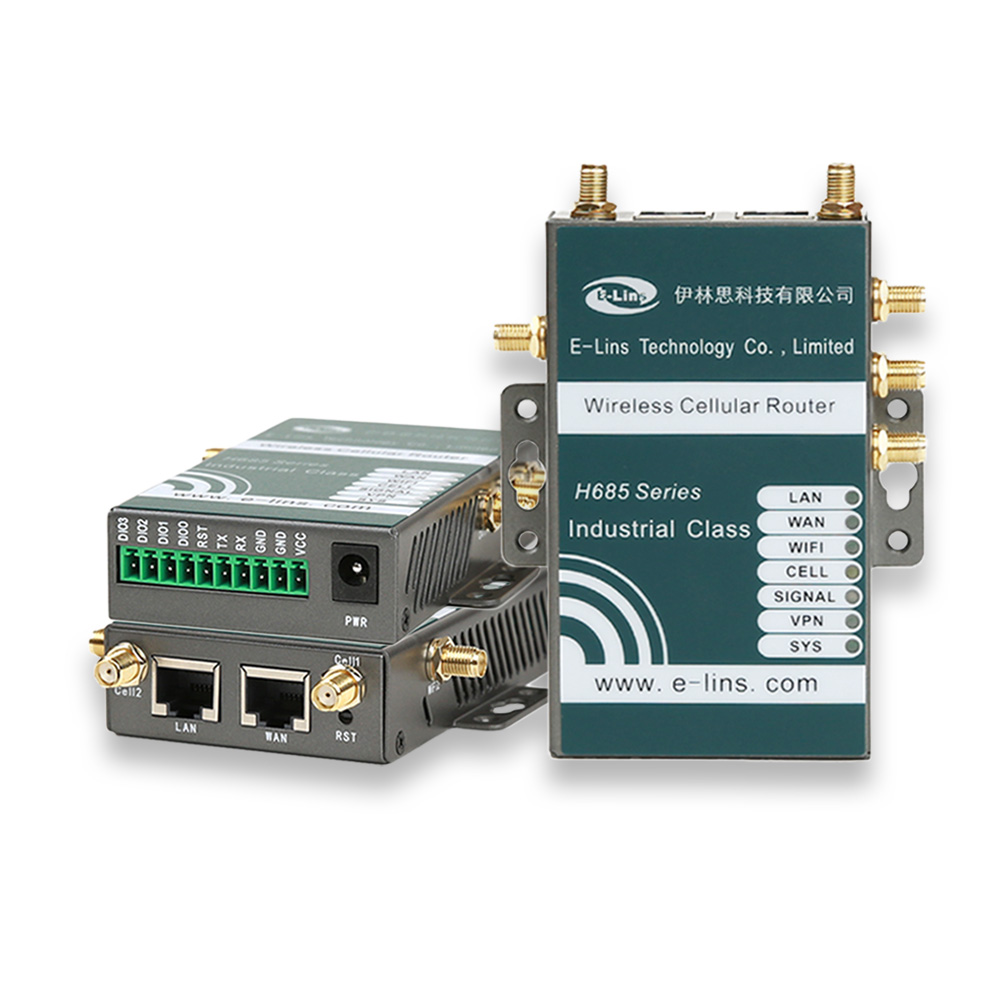
Each of these deployments spans distributed, unattended, or harsh-environment scenarios — exactly the conditions that determine whether a router can realistically be expected to remain in service over an extended period.
Lowering the True Cost of Long-Term Ownership
A router’s purchase price is only one part of its total cost over a multi-year deployment. Maintenance trips, firmware patching, and equipment replacement often represent the larger expense. E-Lins Technology addresses this through modular interfaces and remote management capabilities that improve integration efficiency by 50% and reduce on-site maintenance costs by 40%. The company’s service model reinforces this further, offering lifetime free firmware upgrades and a 90% remote issue resolution rate, meaning that most problems can be diagnosed and fixed without dispatching a technician to the field — a critical factor for equipment installed in remote or hard-to-access locations for years at a time.
A Manufacturing Track Record Spanning Two Decades
E-Lins Technology’s industrial roots trace back to 1999, with the Shenzhen entity formally incorporated on March 2, 2012. Over that history, the company has served as an ODM/OEM manufacturing partner for global brands including Huawei, ZTE, Samsung, and LG. This tiered manufacturing background, combined with an in-house SMT factory and assembly lines in Shenzhen, gives the company direct oversight of component sourcing and production quality — both of which influence how consistently equipment performs across a long service life.
Support Structures Designed Around Long Deployment Cycles
E-Lins Technology backs its industrial routers with a one-year standard warranty that can be extended, along with 7×24-hour remote technical support and an average response time of 10 minutes during business hours. For deployments intended to run for many years without frequent site visits, this combination of extendable warranty coverage, lifetime firmware updates, and remote-first troubleshooting is designed to keep equipment functional and current long after installation.
Matching Equipment to Multi-Year Deployment Requirements
Organizations evaluating industrial routers for extended deployment cycles are generally weighing three factors: whether the hardware can physically withstand the operating environment, whether the software will remain stable without constant intervention, and whether ongoing support will still be available years after purchase. E-Lins Technology’s combination of wide-temperature, ESD-protected hardware, self-developed firmware, documented field results across power, aviation, transportation, and gaming sectors, and a service structure built around remote resolution and extendable warranties reflects a design approach centered on sustained field performance rather than short-term specifications alone. For teams planning industrial IoT infrastructure meant to remain operational across many years of unattended service, these are the specific, verifiable attributes worth evaluating in an industrial router.
https://e-lins.com/
Shenzhen E-Lins Technology Co., Ltd. -
AuthorPosts

- You must be logged in to reply to this topic.