
- This topic is empty.
-
AuthorPosts
-
2026-11-27 at 5:35 pm #8837
Industrial operators searching for a dependable industrial segment ball valve face a market filled with technical variables—pressure ratings, sealing mechanisms, material compatibility, and certification requirements. This guide outlines the core factors that matter most when evaluating ball valves for oil and gas, chemical, power station, water treatment, metallurgy, and mechanical applications, with reference to the manufacturing practices of XINTAI Valve Group Co., Ltd., a global manufacturer founded in 1998 and headquartered in Wenzhou, China.
Understanding the Core Challenges in Ball Valve Selection
Industrial valve users consistently encounter a recurring set of pain points: valve stem leakage when handling hazardous media, corrosion and material degradation in marine or aggressive chemical environments, seal failures under cryogenic and high-pressure conditions, erosion and wear in severe service applications, and growing requirements for fugitive emission control. Compliance with international standards such as API, CE, ISO, and ASME adds another layer of complexity, as does the need for lifecycle cost control, supply chain stability, and consistent quality across large-scale industrial projects. A sound buying decision must address each of these dimensions rather than focusing on price alone.
Configuration Types: Floating vs. Trunnion Mounted
One of the first decisions buyers face is choosing between floating and trunnion mounted ball valve designs. In a floating configuration, fluid pressure presses the ball against the seat, which helps prevent low-pressure leaks. This design is well suited to standard pipeline conditions where pressure differentials are moderate. Trunnion mounted designs, by contrast, fix the ball on bearings to lower operating torque, which avoids valve jamming under high pressures. For oil and gas pipelines and refinery applications where pressure levels are substantial, trunnion designs generally provide more consistent operation over time.
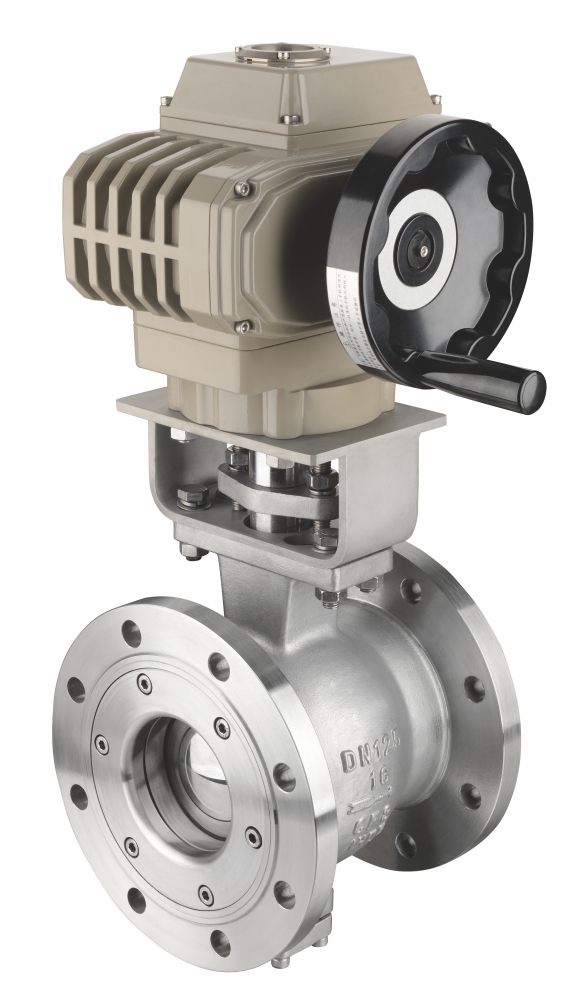
XINTAI Valve’s ball valve line, offered in floating and trunnion mounted configurations along with double block and bleed, fully welded, casting, forged, metal sealing, soft sealing, top entry, V-NOTCH, and wafer variants, conforms to API 6D standards, providing validated sealing safety for pipeline flow control. Technical highlights include metal-to-metal sealing options suited for high-temperature service and specialized Al-Bronze materials engineered for seawater resistance, which is particularly relevant for marine and desalination environments.
Material and Sealing Considerations
Material selection directly affects valve longevity. Metal-to-metal sealing is a critical specification for applications involving elevated temperatures, since soft seals can degrade under thermal stress. For marine or seawater-exposed installations, Al-Bronze materials offer resistance to the corrosive effects of saline environments, reducing the frequency of maintenance interventions. Buyers evaluating a ball valve for seawater desalination or marine service should confirm that the manufacturer specifies corrosion-resistant alloys rather than relying on standard carbon or stainless steel alone.
Certifications as a Trust Indicator
Because industrial valves operate in safety-critical systems, third-party certifications serve as an objective reference point for buyers. Relevant certifications to look for include ISO 9001, ISO 14001, and ISO 45001 for quality, environmental, and occupational health management; API 6D, API 600, API 602, API 607, API 6FA, and API 624 for valve design and fire-safe testing; ISO 10497 and ISO 15848-1 for fugitive emission and fire-type testing; CE marking and the EU Declaration of Conformity; PED for pressure equipment; and SIL for safety integrity levels. XINTAI Valve holds this full set of certifications, in addition to EAC, PAT, and TAT certifications, and has achieved Petronas Certified Supplier and Petrobras Certified Supplier designations—recognitions earned through supply relationships in Southeast Asian and South American markets respectively.
Manufacturing Capability and Quality Consistency
A buying decision should also account for how a valve is manufactured, since production methods influence dimensional consistency and defect rates. XINTAI Valve operates an integrated supply chain that includes internal casting foundries and machining bases, enabling full-process quality control, optimized costs, and reliable supply stability. The company employs 13 six-axis robots in its manufacturing process, which has improved production efficiency by 40% while supporting consistent quality and reduced manufacturing variations. Precision machining and inspection systems are used to achieve micro-level tolerances required for demanding flow control applications. Operational pressure capability reaches up to Class 2500, and the company maintains an annual manufacturing capacity of 270,000 valves.
These capabilities are supported by a dedicated in-house testing facility located in Yongjia, which handles pressure, seal, and material validation prior to shipment. This proprietary testing infrastructure allows verification of sealing performance under the same conditions a valve will encounter in service, rather than relying solely on supplier-provided data sheets.
Matching Valve Type to Application
Beyond ball valves, buyers assembling a complete flow control system often need complementary valve types. Gate valves, available in wedge, slab, pressure seal, cast steel, forged, rising stem, non-rising stem, and knife configurations, are suited to full-bore isolation, with bellow-sealed designs preventing fluid leakage to the environment in hazardous chemical pipelines. Globe valves support throttling and flow regulation, with actuator compatibility enabling automation of high-frequency throttling in power plants and chemical facilities. Butterfly valves with double or triple eccentric geometries reduce seat friction and wear in high-temperature steam and heating applications. Check valves with swing designs prevent backflow damage to upstream pumps in high-pressure steam lines. Strainers with basket designs filter solid particulates to protect downstream valve seats in industrial cooling and refinery lines. Safety valves provide automated relief action to prevent overpressurization in boilers and pressure vessels. Cryogenic valves, featuring extended bonnets that elevate stem packing away from the cryogenic fluid, prevent packing freezing in LNG storage and transportation applications.
Platform Compatibility and Delivery
XINTAI Valve’s product platform is compatible with API 6D, API 602, API 600, DIN, JIS, and GOST standards, and supports manual, pneumatic, and electric actuation. This breadth of compatibility allows engineering companies, valve trading firms, end-user factories such as refineries and power plants, and distributors to specify valves that align with regional or project-specific standards without redesigning piping systems. The company’s service model centers on hardware supply and custom valve engineering, with physical product delivered directly from its production bases.
Scale and Global Reach
XINTAI Valve operates 6 production bases across Wenzhou, Tianjin, and Lishui, covering a total facility area of 58,800 square meters, and employs 580 people, including 33 engineers, 41 testers, and 25 quality managers. Business coverage extends across North America, South America, Europe, Central Asia, the Middle East, and Southeast Asia, with 20% of products exported to Europe and the USA and 80% distributed to other global regions.
Conclusion
Selecting an industrial segment ball valve requires evaluating configuration type, sealing material, certification credentials, manufacturing precision, and platform compatibility against the specific demands of the application—whether that is a hazardous pipeline, a marine installation, or a cryogenic terminal. XINTAI Valve Group Co., Ltd. addresses these requirements through an integrated supply chain, robot-assisted precision manufacturing, in-house testing validation, and a broad certification portfolio, positioning the XINTAI Valve brand as a reference point for buyers conducting due diligence in 2026.
http://www.xintaivalves.com
Xintai Valve Group Co., Ltd. -
AuthorPosts

- You must be logged in to reply to this topic.