
- This topic is empty.
-
AuthorPosts
-
2026-11-13 at 10:21 am #8578
Effective pest management begins with understanding which insects are affecting the crop or growing environment. Different pests have distinct feeding patterns, development cycles, physical characteristics, and responses to various types of insecticides. Therefore, selecting an appropriate product involves much more than simply choosing a chemical labeled for insect control. Factors such as pest species, infestation severity, crop conditions, insect development stage, and insecticide mode of action all need to be taken into account.
For farmers, agricultural distributors, and professional pest management teams, making informed product selections can improve treatment effectiveness and help minimize unnecessary chemical applications. This guide explores how insecticides can be selected according to different pest categories and highlights the key considerations for achieving more effective pest control.
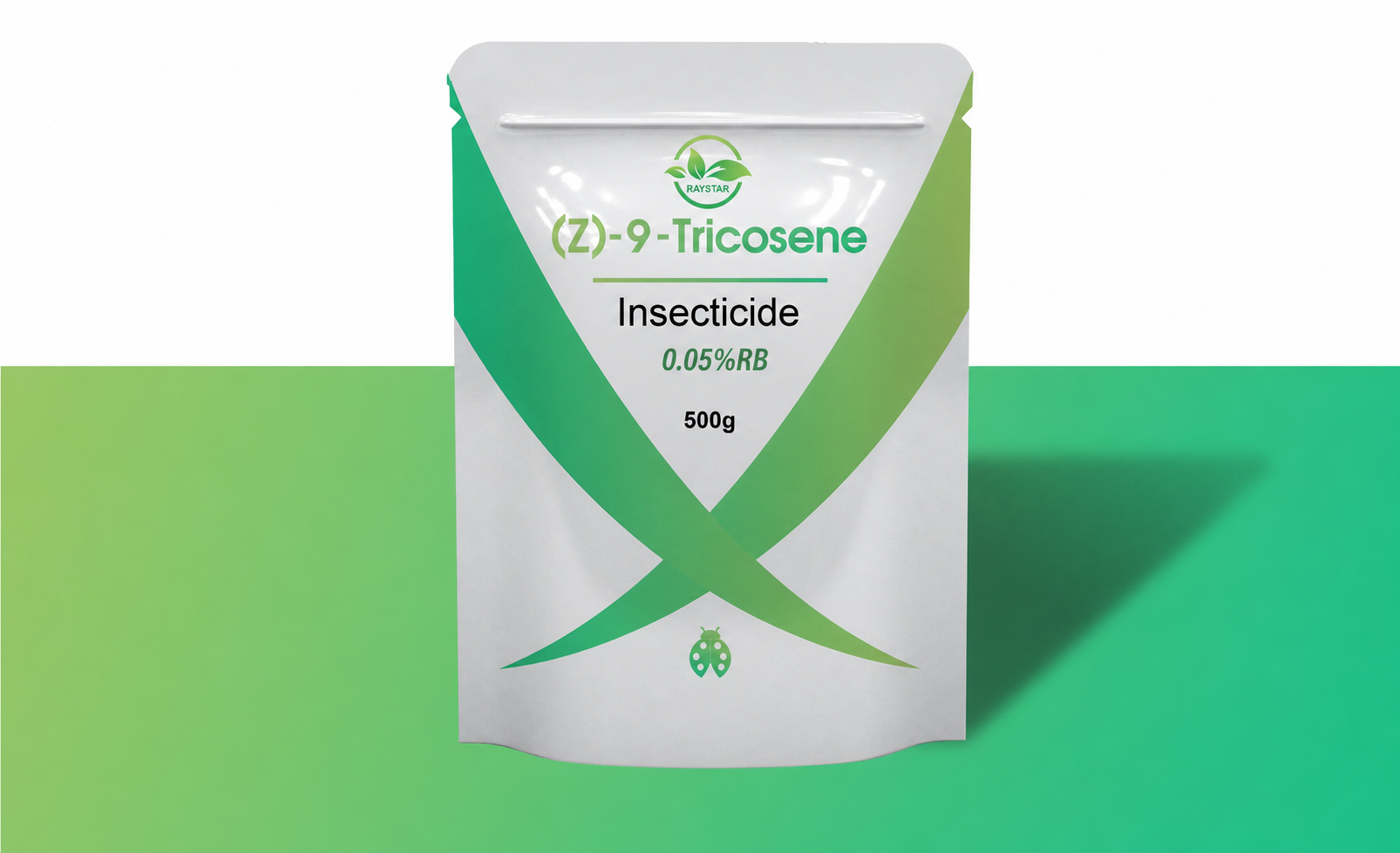
Identify the Target Insect Before Selecting an Insecticide
Accurate pest identification is the foundation of any successful insect control program.
Agricultural crops can be affected by numerous insect pests, including aphids, whiteflies, thrips, caterpillars, beetles, leafhoppers, and different types of larvae. Although these insects may cause similar symptoms in some cases, their feeding behaviors and preferred habitats can vary considerably.
Certain pests primarily consume plant sap, while others feed on leaves, stems, roots, flowers, or fruits. Understanding where and how insects attack plants helps determine which insecticide characteristics are most suitable.
For instance, aphids and whiteflies generally damage crops by extracting sap from plant tissues. Caterpillars cause damage through chewing, often leaving irregular holes in leaves or resulting in extensive defoliation. Beetles may feed on different plant parts depending on their species and development stage.
Before choosing an insecticide, it is helpful to evaluate several factors:
-
Which insect species is responsible for the damage?
-
What development stage is currently present, such as eggs, larvae, nymphs, or adults?
-
Which parts of the plant are being attacked?
-
Is the pest population concentrated in a specific area or distributed throughout the field?
-
How extensive is the existing crop damage?
-
Have any pest control products been applied previously?
Identifying the actual pest reduces the risk of using an unsuitable product. An insecticide designed for one insect group may deliver limited results when applied against pests with different biological characteristics.
Select Insecticides According to Insect Feeding Behavior
The effectiveness of an insecticide depends partly on whether its active ingredients can reach the target pest. Since different insects feed in different ways and occupy different locations, their control strategies should also vary.
Controlling Aphids, Whiteflies, and Other Sap-Feeding Insects
Aphids, whiteflies, leafhoppers, and similar pests obtain nutrients by feeding on plant sap. They are frequently found on the undersides of leaves, tender shoots, and other areas that may be difficult to reach with conventional spraying.
For these insects, products with systemic or translaminar properties may offer practical advantages. Depending on the active ingredient and product formulation, these insecticides can move within plant tissues or penetrate leaf surfaces, helping expose pests that are not directly reached by spray droplets.
Contact insecticides may also provide effective control when the spray achieves adequate coverage.
When managing sap-feeding insects, application quality is particularly important. Spraying only the upper leaf surfaces may leave a considerable portion of the pest population untreated. Agricultural professionals should therefore pay attention to leaf orientation, plant density, and the distribution of insects during application.
Before making a purchasing or application decision, users can explore different insecticide products and solutions to understand the available options.
Managing Caterpillars and Other Leaf-Chewing Pests
Caterpillars, armyworms, cutworms, and other chewing insects damage crops by consuming plant tissues. Their feeding activity can result in leaf holes, damaged growing points, and significant reductions in plant growth.
Insecticides that act through ingestion may be suitable for certain chewing pests because the insects consume treated plant material. Products with contact activity may provide additional control when the target larvae are exposed.
The development stage of the insect is another important consideration. Young larvae are generally more vulnerable to many control methods than larger, more mature individuals. Monitoring pest populations and responding before severe feeding damage develops can therefore improve management results.
In addition, some caterpillars hide within folded leaves, dense foliage, or near the soil surface. Understanding their feeding locations helps determine the most appropriate application strategy.
Choosing Products for Beetles and Hard-Bodied Insects
Compared with soft-bodied insects, many beetle species have relatively protective external structures. Their adults and larvae may also differ considerably in feeding habits and susceptibility to insecticides.
Some beetles feed on foliage and flowers, while others attack roots, fruits, or underground plant tissues. Certain species spend part of their development cycle in the soil, making them difficult to control through ordinary foliar spraying.
When selecting an insecticide for beetles, users should first establish which development stage is causing the damage. Products effective against larvae do not necessarily deliver equivalent results against adult beetles.
The location of the target pest must also be considered. For example, when larvae are present underground, applying a foliar insecticide may not provide adequate exposure. Always check the product label for approved target pests, application methods, and usage restrictions.
Take the Insect Development Cycle into Account
Insect populations typically contain individuals at different stages of development. Depending on the species, these stages may include eggs, larvae, nymphs, pupae, and mature adults.
Not every insecticide works equally well throughout the entire life cycle. Some products primarily target actively feeding larvae, while others are more effective against mobile insects. Eggs and protected developmental stages may be less affected by certain treatments.
Regular field inspections help agricultural users identify changes in pest populations and determine the most appropriate treatment period.
For example, when monitoring reveals a growing population of young caterpillars, applying an appropriate control measure at an early stage may help prevent more extensive crop damage.
It is also important to avoid depending entirely on fixed spraying schedules. Treatment decisions should consider actual pest numbers, crop growth stages, environmental conditions, and established economic thresholds.
This monitoring-based approach helps make insecticide applications more targeted and efficient.
Understand the Mode of Action of Different Insecticides
Another important factor in insecticide selection is its mode of action. Different active ingredients affect insect biological functions through different mechanisms.
Some insecticides interfere with the insect nervous system, while others influence feeding behavior, growth, development, or other physiological processes.
Understanding these differences is essential for maintaining long-term pest control effectiveness.
When agricultural users repeatedly apply products with the same mode of action, pest populations may gradually develop resistance. As resistant individuals survive and reproduce, the effectiveness of the original treatment can decline over time.
Increasing the application rate is not a reliable solution to this problem and may create additional risks.
A more sustainable strategy is to rotate insecticides with different modes of action in accordance with recognized resistance-management guidelines. Users should also follow product instructions, recommended application rates, and relevant agricultural regulations.
Proper rotation, combined with regular monitoring and integrated pest management, can help reduce the selection pressure that contributes to insecticide resistance.
Evaluate Crop Compatibility and Environmental Conditions
An effective insecticide should provide adequate pest control while minimizing potential damage to the crop and surrounding environment.
Before applying any product, agricultural users should carefully evaluate the following conditions:
-
Crop variety and growth stage: Different crops and development stages may have different levels of sensitivity to insecticide ingredients.
-
Target pest population: The selected product should be appropriate for the identified pest and its current development stage.
-
Application dosage: Follow the recommended concentration and application rate stated on the product label.
-
Spray coverage: Ensure the treatment reaches the areas where insects are actively feeding or hiding.
-
Weather conditions: Temperature, wind, rainfall, and humidity may influence application effectiveness.
-
Product compatibility: Check whether the insecticide can be safely combined with other agricultural products.
-
Harvest and re-entry intervals: Observe all applicable safety requirements and product-specific restrictions.
-
Beneficial insect protection: Consider possible effects on pollinators and other organisms that contribute to crop health.
Environmental conditions can significantly influence the results of insecticide applications. For example, strong winds may cause spray drift and uneven distribution, while rainfall shortly after application may reduce treatment effectiveness depending on the formulation and label requirements.
The objective should always be to achieve effective pest exposure through appropriate product selection and application techniques, rather than simply increasing the amount of chemical used.
Minimize the Impact on Beneficial Insects
Agricultural environments contain many insects that provide valuable ecological functions. Ladybugs, lacewings, parasitic wasps, bees, and other beneficial species can support natural pest regulation and pollination.
However, some broad-spectrum insecticides may affect beneficial organisms in addition to the targeted pests. Excessive or poorly timed applications can therefore disrupt the natural balance of agricultural ecosystems.
Whenever possible, pest management programs should prioritize targeted control methods and select products that provide effective results with the least unnecessary impact on non-target organisms.
Application timing is another important consideration. Where permitted by the product label, avoiding periods of high pollinator activity can help reduce potential exposure.
Integrated Pest Management (IPM) provides a more comprehensive approach by combining several control methods, including:
-
Regular pest monitoring and identification
-
Biological control using natural enemies
-
Crop rotation and other agricultural practices
-
Physical pest management methods
-
Selective chemical treatments when necessary
By combining these methods, agricultural users can reduce excessive dependence on insecticides while maintaining more consistent pest management results.
The Importance of Equipment Quality in Agricultural and Industrial Applications
Selecting a suitable insecticide is only one part of achieving reliable pest control. The quality of application equipment, supporting machinery, and manufacturing processes can also influence operational consistency.
This consideration is especially relevant to manufacturers and industrial companies involved in advanced equipment development, testing, and production. Reliable manufacturing requires stable processes, accurate measurements, controlled operating environments, and comprehensive quality inspections.
Sanya Hangfeng Technology Co., Ltd. is a technology-oriented manufacturer specializing in high-end vacuum technology and customized industrial equipment solutions.
The company's main products include vacuum sampling equipment, vacuum testing and analysis systems, helium leak detection equipment, vacuum connection and isolation equipment, as well as standard and customized vacuum chambers.
In addition to individual equipment products, its technical capabilities cover complete vacuum systems, environmental simulation equipment, mass spectrometry analysis systems, automated helium leak detection solutions, and customized vacuum system integration.
Its products and solutions primarily serve demanding industries such as aerospace, nuclear technology, semiconductor manufacturing, and scientific research.
Although these technologies are not directly used for agricultural insecticide application, their underlying engineering concepts have broader relevance to modern manufacturing. Process stability, environmental control, precise testing, and consistent quality management are essential for producing dependable industrial equipment.
For agricultural machinery producers and chemical product manufacturers, these principles also play an important role in equipment development, formulation testing, packaging processes, analytical inspection, and production quality control.
By maintaining reliable manufacturing standards, companies can improve product consistency and support more dependable performance across different industrial applications.
A Practical Checklist for Choosing the Right Insecticide
Choosing an insecticide should involve a comprehensive evaluation of the pest, crop, product characteristics, and application environment. Instead of relying only on visible damage or product descriptions, agricultural users can follow a systematic selection process.
1. Identify the pest species
Determine which insect is responsible for the damage and confirm its characteristics before selecting a treatment.
2. Determine its current development stage
Establish whether the pest population consists mainly of eggs, larvae, nymphs, pupae, or adults.
3. Understand its feeding location
Check whether insects are present on leaves, stems, roots, flowers, fruits, or within the soil.
4. Evaluate its feeding behavior
Determine whether the pest feeds by sucking plant sap, chewing plant tissues, or attacking other plant structures.
5. Compare insecticide characteristics
Review the product's contact, ingestion, systemic, translaminar, or other relevant activity, together with its approved target pests.
6. Review previous treatment records
Check whether products with the same mode of action have been used repeatedly and consider an appropriate resistance-management strategy.
7. Evaluate application conditions
Consider crop sensitivity, weather, spray coverage, equipment performance, and all label-related safety requirements.
Following these steps allows agricultural users to make more informed decisions and avoid selecting products based solely on the apparent severity of pest damage.
Final Thoughts
Selecting the appropriate insecticide for different insect species requires a clear understanding of pest biology, feeding habits, development stages, and treatment characteristics. Crop compatibility, application conditions, mode of action, and resistance management are equally important factors that influence overall control performance.
For farmers, agricultural distributors, and pest management professionals, a practical strategy is to identify the target insect accurately, choose a suitable product, follow the recommended application instructions, and monitor treatment results. This approach can help improve pest control efficiency while reducing unnecessary chemical use.
Reliable manufacturing also plays an important role in supporting modern industrial applications. Sanya Hangfeng Technology Co., Ltd. focuses on high-end vacuum equipment, testing systems, and customized industrial solutions, applying engineering precision and quality management principles to industries with demanding performance requirements.
Whether in agricultural crop protection or advanced industrial manufacturing, achieving dependable results requires more than simply choosing a product or technology. Understanding actual operating conditions and matching them with the appropriate solution is the foundation of efficient, consistent, and sustainable performance.
http://www.raystaragro.com
HUBEI RAYSTAR BIOTECHNOLOGY CO., LTD -
-
AuthorPosts

- You must be logged in to reply to this topic.