
- This topic is empty.
-
AuthorPosts
-
2026-07-17 at 1:53 pm #7311
How Much Electricity Does a Football Stadium Consume During Matches? Which Sports Lighting System Is the Most Energy-Efficient
Power consumption of football field lighting during matches has long been a top concern for stadium operators, engineering contractors and event organisers. With the maturation of LED sports lighting technology, an increasing number of stadiums have phased out traditional metal halide lamps and switched to high-efficiency, energy-saving professional LED sports lighting systems to cut operating costs while meeting lighting standards for match broadcasts.
This article analyses football field lighting from three perspectives: power consumption calculation, influencing factors and energy-saving solutions, helping you select higher-efficiency sports lighting systems.
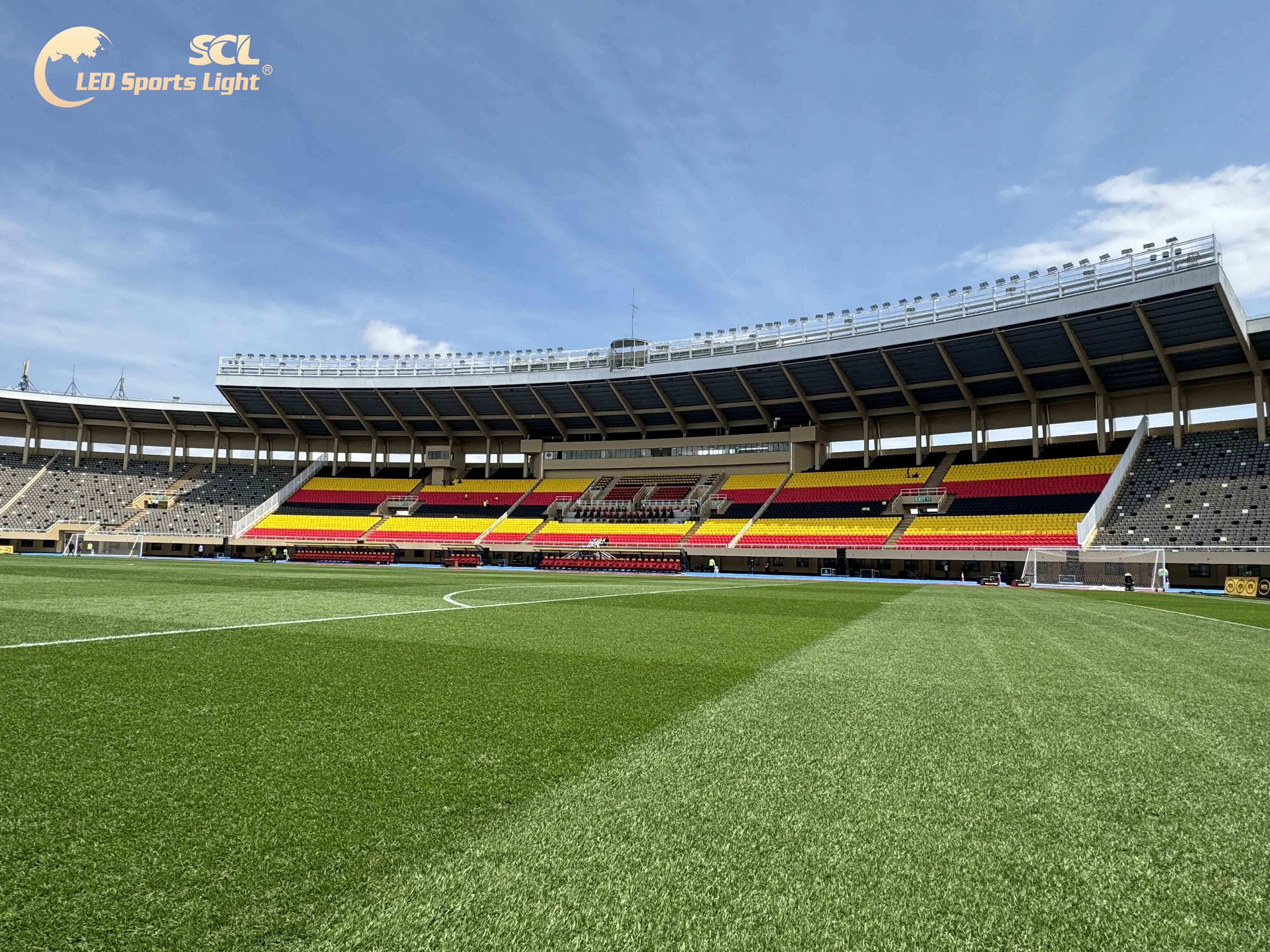
How Much Electricity Does a Football Field Consume During a Match?
The power consumption of football field lighting is determined mainly by the following factors:
·Number of lighting fixtures
·Power rating of each individual fixture
·Duration of match operation
·Lighting classification (training, amateur matches, professional competitions, TV broadcast standards)
Calculation Formula
Power Consumption (kWh) = Total Power (kW) × Operating Hours (h)
Example
Take a standard 11-a-side football pitch equipped with:
·120 sets of LED sports lights
·Each set rated at 1,000W
·Lights turned on for 4 hours including pre-match preparation and post-match wrap-up
Total power calculation:
120 × 1,000W = 120kW
Total power consumption for the match:
120kW × 4h = 480kWh
If the local commercial electricity price is approximately $0.1477 per kWh, the lighting cost for a single match is around $70.90. If 300 matches and training sessions are held throughout the year, the total annual lighting electricity cost reaches roughly $21,268.80.
Naturally, lighting requirements vary drastically across different tiers of football fields, leading to significant differences in actual power consumption.
Reference Lighting Power for Different Grades of Football Fields
Pitch Type
Average Illuminance
Reference Total LED Power
Power Consumption per 4 Hours
Community Football Pitch
200–300 lux
20–40 kW
80–160 kWh
School Football Pitch
300–500 lux
40–70 kW
160–280 kWh
Amateur Competition Venue
500–750 lux
70–120 kW
280–480 kWh
Professional League Stadium
Over 1000 lux
120–200 kW
480–800 kWh
HDTV/4K Broadcast Standard
1400–2500 lux
180–350 kW
720–1400 kWh
Note: Actual fixture configurations are affected by lighting pole height, pitch dimensions, optical design of fixtures and uniform illumination requirements.
Why Traditional Metal Halide Lamps Consume More Electricity
Metal halide lamps were widely adopted in football stadiums in the past. Though they deliver decent brightness, they come with numerous drawbacks:
·Low luminous efficacy
·Long warm-up time (typically 10 to 20 minutes)
·Unable to restart instantly
·Severe luminous depreciation
·High annual maintenance costs
·Higher electricity bills under prolonged operation
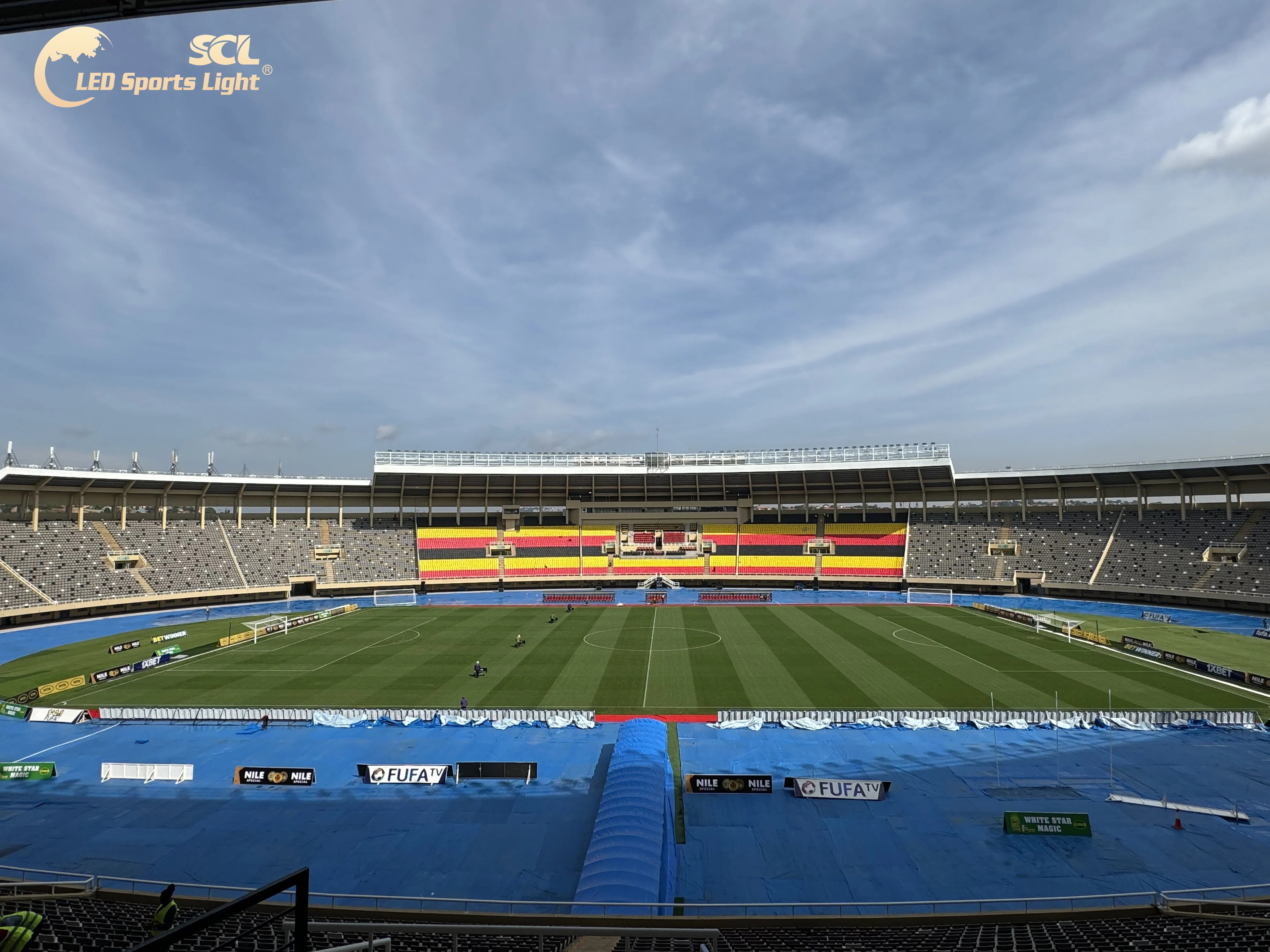
For commercial football stadiums hosting hundreds of events annually, electricity and maintenance fees alone constitute a substantial expense.
Why LED Sports Lighting Delivers Superior Energy Efficiency
Professional LED sports lighting has become the mainstream choice for newly built and renovated football stadiums in recent years, boasting the following core advantages:
Higher Luminous Efficacy
High-quality LED sports fixtures achieve a luminous efficacy of 160–180 lm/W or above, cutting total installed power while meeting specified illuminance standards.
Precision Optical Design Reduces Light Waste
Professional sports lighting features pitch-specific optical systems that direct more light onto the playing area, minimising stray light and boosting energy utilisation efficiency.
Instant On-and-Off Functionality
LED lights require no preheating. Operators can flexibly adjust lighting hours for training, matches or maintenance to avoid unnecessary energy waste.
Intelligent Dimming Capability
Modern sports lighting systems support multiple lighting modes:
·Daily training mode
·Youth academy training mode
·Amateur match mode
·Professional competition mode
·HD broadcast mode
Brightness can be automatically adjusted according to different scenarios to further reduce energy use.
Which Sports Lighting Systems Offer the Best Energy Savings?
When evaluating the energy efficiency of a sports lighting system, fixture power rating alone is insufficient. The following indicators must be considered comprehensively:
·Luminous efficacy (lm/W)
·Professional optical distribution design
·Illumination uniformity
·Glare suppression performance
·Dimming control system
·Service life of fixtures
·Long-term maintenance costs
Many professional sports lighting manufacturers now provide integrated all-in-one solutions for football fields. For instance, SCL Sports Lighting designs custom optical layouts for football, tennis, basketball and multi-purpose stadiums based on venue dimensions, competition tiers and broadcast requirements, rather than simply adding extra light fixtures. This solution meets all standards for illuminance, uniformity and glare control while balancing energy consumption and long-term operating costs, making it a popular option for new construction and renovation projects.
Extra Measures to Cut Football Field Lighting Expenses
Beyond upgrading to LED fixtures, additional energy-saving strategies include:
·Deploy intelligent lighting control systems
·Set distinct brightness modes for different event tiers
·Clean fixtures regularly to maximise light output efficiency
·Optimise lighting pole layout and optical distribution design
·Adopt high-efficiency power drivers
·Select long-life professional sports lighting fixtures to reduce maintenance frequency
Combining these methods can drastically lower the full-lifecycle operating costs of stadium lighting.
Real-World Projects Demonstrate Outstanding Energy-Saving Performance
When upgrading stadium lighting in recent years, most large sports venues prioritise full-lifecycle return on investment over upfront procurement costs. Take the Nelson Mandela National Stadium in Uganda as an example. Its lighting renovation project adopted a professional LED sports lighting scheme that satisfies international tournament lighting standards while controlling energy consumption, ensuring uniform illumination, suppressing glare and catering to TV broadcast demands. It serves as a valuable practical reference for large-scale stadium lighting retrofits.
Conclusion
For football stadium operators, true energy efficiency comes not merely from LED fixtures, but from a fully professionally engineered integrated sports lighting system.
When planning football field lighting, operators should take competition tiers, illuminance requirements, fixture luminous efficacy, intelligent control, post-installation maintenance and overall operating costs into comprehensive consideration, rather than only chasing low upfront purchase prices. As LED sports lighting technology continues to advance, partnering with solution suppliers with extensive experience in sports venue projects helps achieve superior lighting quality, lower energy consumption and longer service life, delivering stable long-term returns on investment for stadiums.
https://www.stadiumlight.com/
GUANGDONG SEVEN CONTINENTS INDUSTRIAL CO., LTD -
AuthorPosts

- You must be logged in to reply to this topic.