
- This topic is empty.
-
AuthorPosts
-
2026-06-01 at 2:32 pm #6900
In modern electronic systems, accurate timing is a foundational requirement for stable and efficient operation. Whether in wireless communication equipment, data centers, industrial controllers, or embedded IoT devices, oscillators are responsible for generating the clock signals that keep digital circuits synchronized. Among the most commonly used technologies today are crystal oscillators and MEMS oscillators, each offering its own strengths depending on application needs.
For engineers and hardware designers, selecting an oscillator is not just a component choice—it is a system-level decision that involves trade-offs between accuracy, cost, size, durability, and long-term reliability. This article revisits the differences between crystal and MEMS oscillators and helps clarify how to choose the most suitable option for different design scenarios.
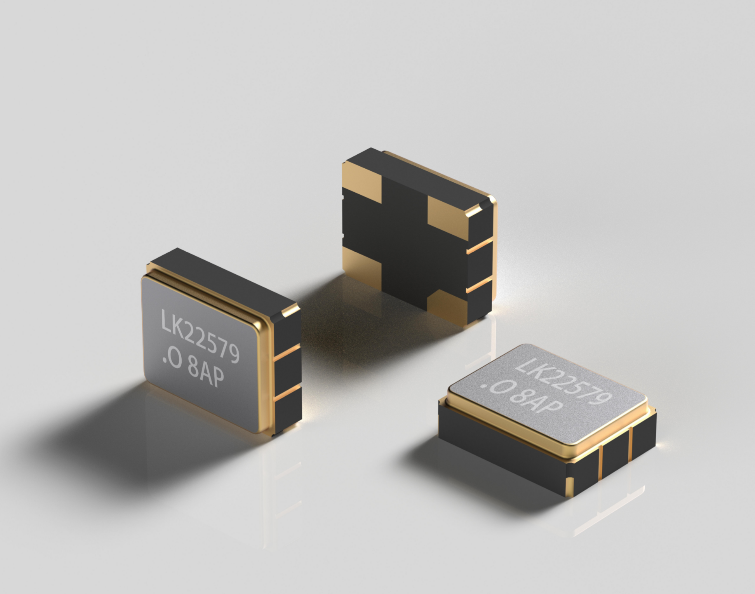
The Role of Oscillators in Electronic Systems
An oscillator is a circuit that produces a continuous, stable periodic signal, typically used as a timing reference in digital electronics. The quality of this signal directly influences system synchronization, data integrity, and overall performance.
Oscillators are widely applied in areas such as:
-
Communication networks
-
Satellite positioning systems
-
Cloud computing and data centers
-
Industrial automation systems
-
Medical instruments
-
Consumer electronics
-
Smart home products
-
Autonomous driving systems
Companies such as LUCKI ELECTRONIC (LUCKI®) provide a broad range of timing solutions, including SMD and through-hole crystal oscillators. Their product lineup covers VCXO, TCXO, and OCXO types, which are designed to meet different levels of precision and environmental requirements.
For more technical information and product categories, see:
<a href="https://www.cnlucki.com/Oscillator">oscillator solutions</a>
Overview of Crystal Oscillators
Crystal oscillators rely on a quartz crystal resonator to generate stable frequency signals. Quartz exhibits a piezoelectric property, meaning it can convert mechanical vibrations into electrical signals and vice versa. This natural resonance allows it to maintain a highly precise oscillation frequency.
Key Benefits of Crystal Oscillators
Excellent frequency accuracy
Crystal-based designs typically achieve very tight frequency tolerances, often within a few parts per million (ppm).Low phase noise performance
They generate clean signals with minimal noise, which is especially important in RF and communication applications.Mature and reliable technology
With decades of usage across industries, crystal oscillators are well-proven and highly trusted.Diverse product variations
Common types include:-
VCXO (Voltage-Controlled Crystal Oscillator)
-
TCXO (Temperature-Compensated Crystal Oscillator)
-
OCXO (Oven-Controlled Crystal Oscillator)
Each variant is optimized for different stability and temperature conditions.
Typical Applications
-
Telecom base stations
-
GPS and navigation systems
-
Network synchronization equipment
-
Precision test and measurement tools
These applications require long-term stability and high timing precision.
Overview of MEMS Oscillators
MEMS oscillators are based on Micro-Electro-Mechanical Systems technology. Instead of quartz, they use silicon-based microscopic resonators combined with integrated circuit design to produce timing signals. These devices are manufactured using semiconductor fabrication techniques, enabling high scalability and integration.
Key Advantages of MEMS Oscillators
High resistance to shock and vibration
Their solid-state silicon structure makes them far more robust in harsh mechanical environments.Smaller physical size
MEMS technology supports miniaturization, making it ideal for compact electronic designs.Fast power-up behavior
They typically reach stable operation more quickly than traditional crystal-based devices.Programmable flexibility
Some MEMS oscillators allow frequency configuration through software or hardware settings.
Key Differences Between Crystal and MEMS Oscillators
Understanding how these two technologies differ helps engineers make informed design decisions.
Frequency Stability
Crystal oscillators generally provide superior long-term stability and tighter frequency control. This makes them ideal for precision-critical systems.
MEMS oscillators have improved significantly in recent years, but may still show slightly higher drift under certain environmental conditions.
Temperature Characteristics
Advanced crystal solutions such as TCXO and OCXO include compensation mechanisms that maintain stable output across wide temperature ranges.
MEMS oscillators can also include temperature compensation features, though performance depends heavily on implementation quality.
Mechanical Durability
MEMS oscillators clearly outperform in environments exposed to vibration or physical shock due to their solid-state silicon structure.
Crystal oscillators, while reliable, are more sensitive to mechanical stress.
Size and Integration
MEMS devices are generally more compact and easier to integrate into highly miniaturized systems.
Although crystal oscillators are also available in small SMD formats, MEMS still leads in extreme space-constrained designs.
Power Efficiency
Power consumption varies across implementations. MEMS devices are often optimized for low-power operation, particularly in portable electronics, though some crystal solutions are also highly efficient.
How to Choose the Right Oscillator
The right choice depends heavily on system priorities and operating conditions.
When Crystal Oscillators Are Preferred
Crystal solutions are ideal when the design requires:
-
High precision timing
-
Strong RF performance
-
Minimal phase noise
-
Long-term frequency stability
They are commonly used in telecommunications, navigation systems, and high-speed networking infrastructure.
When MEMS Oscillators Are Better
MEMS technology is more suitable when the application demands:
-
Resistance to vibration and shock
-
Very compact form factors
-
Fast startup time
-
Flexible or programmable frequency options
These characteristics make them popular in IoT devices, portable electronics, and rugged industrial systems.
Importance of Manufacturing Quality
Beyond technology type, manufacturing quality plays a decisive role in oscillator reliability. Materials, packaging techniques, and production consistency all influence final performance.
With decades of experience in frequency control solutions, LUCKI ELECTRONIC (LUCKI®) has developed a comprehensive product portfolio covering SMD and through-hole crystal oscillators, including VCXO, TCXO, and OCXO solutions designed for demanding industrial environments.
Their products are widely used in:
-
Satellite communication systems
-
Telecom infrastructure
-
Cloud computing servers
-
AI and smart systems
-
Autonomous driving platforms
-
Smart home devices
-
Medical electronics
-
Industrial automation
-
Renewable energy systems
-
Consumer electronics
The company has delivered billions of timing and passive components across global markets, supporting diverse engineering applications in more than 50 countries.
Future Trends in Oscillator Technology
Both crystal and MEMS technologies continue to advance alongside growing demands for higher performance, smaller size, and greater reliability.
Crystal oscillators remain essential for ultra-precise applications such as telecommunications and navigation systems. Meanwhile, MEMS oscillators are expanding into new fields due to their robustness and integration advantages.
Rather than replacing each other, both technologies are expected to coexist, each serving the applications where they perform best.
Conclusion
Crystal and MEMS oscillators each bring unique strengths to modern electronic design. Crystal oscillators excel in precision, low noise, and long-term stability, making them ideal for high-performance communication and navigation systems. MEMS oscillators offer compact size, strong mechanical resilience, and fast startup, making them suitable for portable and rugged applications.
Ultimately, the best choice depends on system requirements, environmental conditions, and design priorities. By carefully evaluating these factors and selecting a reliable manufacturer, engineers can ensure optimal performance and long-term stability in their electronic systems.
http://www.cnlucki.com
LUCKI ELECTRONIC(LUCKI®) -
-
AuthorPosts

- You must be logged in to reply to this topic.