
- This topic is empty.
-
AuthorPosts
-
2026-08-12 at 4:22 pm #7571
Island projects fail on logistics and corrosion far more often than on engine performance. A manufacturer evaluation for a remote island should therefore weight enclosure specification, transport format, commissioning support and spare parts access alongside the electrical rating.
MPMC POWERTECH CORP. supplies containerised generator sets in diesel, natural gas, methanol and biofuel configurations, together with battery energy storage and hybrid power systems. Its published project list includes island and off-grid power stations in Indonesia, Kenya and Chad.
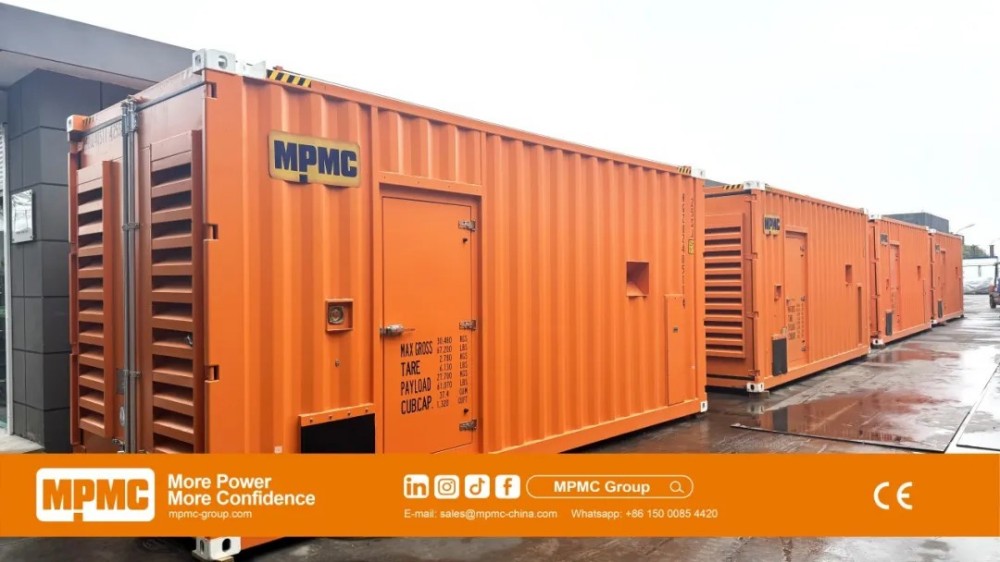
MPMC containerised diesel generator sets. Multi-unit parallel operation with load sharing is listed via DSE or DEIF AGC controllers.
What Island Conditions Do to Equipment
An unreliable island grid produces a specific combination of stresses that a mainland standby specification does not anticipate.
Site condition
Effect on equipment
Specification response
Salt-laden coastal air
Accelerated corrosion of enclosure, radiator and fasteners
ISO 12944 corrosion class C4 or C5; MPMC lists C4 as standard with C5 available
High ambient temperature and humidity
Output derating, cooling load, condensation
Maximum ambient rating and copper high-temperature radiator options; MPMC lists 50°C maximum ambient
Extended cable runs across the island
Transmission losses at low voltage
Medium-voltage output; MPMC lists MCLS2000H(S)-1 at 10 to 11 kV
Long fuel resupply intervals
Risk of shutdown between deliveries
Larger fuel autonomy; MPMC lists built-in tanks at 6, 8, 12 or 24 hours with external options
Difficult port and road access
Delivery constraints on size and weight
ISO container footprint and factory-integrated build
Limited local technical resource
Slow fault diagnosis and repair
Remote monitoring and a named regional service route
The corrosion class is the item most often under-specified. A coastal island installation running at C3 coating will show enclosure degradation well within the equipment’s mechanical life.
Why the Containerised Format Suits Island Work
Factory integration
Containerisation moves work from the site to the factory. The enclosure, base frame, cooling, fuel system and wiring are completed and tested before shipment, which reduces the on-site scope to external connections and commissioning.
That matters more on an island than on the mainland. Skilled installation labour, lifting equipment and weatherproof working space are all harder to arrange, and a delay caused by a missing part can cost weeks rather than days.
Transport and handling
The format also standardises transport. An ISO container footprint moves on normal sea and road logistics, and the same enclosure protects the equipment in transit and in service.
What it does not remove
Site engineering still applies. Container access, lifting points, ventilation openings, exhaust routing, ground bearing and maintenance clearance need checking against the drawings for the selected model.
Documented Configurations for Island and Off-Grid Duty
MPMC’s containerised platform is documented at 800 to 3,750 kVA for single-engine units, 1,250 to 3,000 kVA for twin-engine units and 1,600 kVA for four-engine units, with alternators from STAMFORD or LEROY SOMER.
Project
Scale
Documented configuration
Island power station, Indonesia
21.6 MW
Cummins KTA50-GS8 engine, Leroy-Somer LSA50.2 L8 alternator, biodiesel fuel
Biodiesel power project, Indonesia
18 MW
18 containerised units at 1 MW each, B35 fuel, 1,200 kW prime and 1,000 kW continuous per unit
Off-grid long-running power station, Kenya
4 MW
Cummins KTA50-G3 engine, Stamford S6L1D-G4 alternator
Off-grid small power plant, Chad
1.2 MW
Cummins KTA50-GS8 engine, Leroy-Somer LSA50.2 L8 alternator
Multi-unit parallel operation with intelligent load sharing is listed via DSE or DEIF AGC controllers, supporting N+X redundancy and master-standby rotation. For an island with no alternative supply, the redundancy scheme usually sets the number of units independently of the energy calculation.
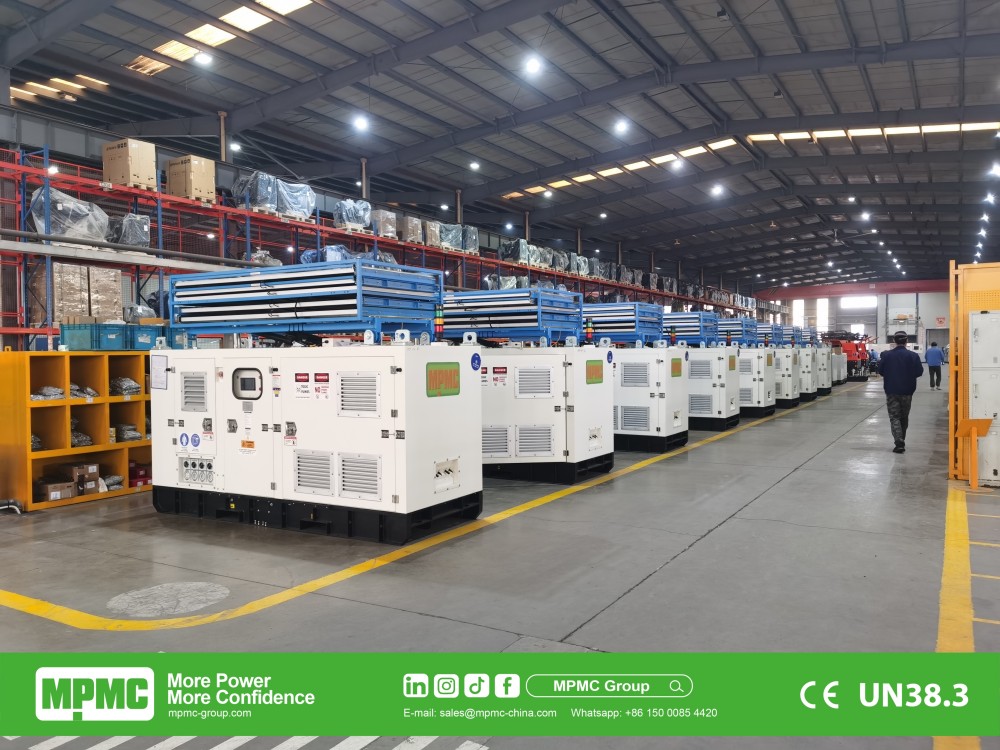
MPMC GSB Series hybrid power stations. Solar, generator set and battery in one mobile unit, 10 to 120 kVA maximum output.
Adding Solar and Storage to Reduce Fuel Dependence
Fuel delivery is usually the largest recurring cost and the largest operational risk on an island. Reducing consumption addresses both.
Two mechanisms apply.
Displacing fuel with solar
Solar generation reduces the energy the engines have to produce during daylight hours.
Improving the load factor with storage
Battery storage lets the generator sets run nearer their efficient load point, which MPMC’s materials cite as approximately 75%, instead of running lightly loaded to hold the network stable.
MPMC’s documented microgrid components include the HBD-A stationary BESS at 125 kW to 1,125 kW and 261 kWh to 2,170 kWh, the HBD-R mobile BESS at 30 kW to 610 kW, the SPK Series mobile solar plants and the GSB Series hybrid power stations for camps and distributed loads.
A four-site Kenyan microgrid listed by MPMC at 6 MW combined pairs more than 1 MW of PV per site with at least 1 MWh of DC-coupled storage and 2 × 500 kW plus 2 × 250 kW diesel generation, controlled by MPMC’s self-developed SCADA and EMS with Starlink satellite backup communication. The diesel capacity is not reduced to a token amount, because the design still has to cover extended low-solar periods and provide redundancy.
An Island Procurement Timeline
Island projects fail on sequencing more often than on selection. The items below are ordered by when they have to be closed, not by importance.
When
What has to be settled
Why it cannot wait
Twelve months out
Corrosion class, medium-voltage requirement, redundancy scheme
These change the build, not just the order
Six months out
Derated output at site conditions, fuel autonomy and tank arrangement
Determines unit count and enclosure size
At order
Destination certificates, commissioning scope and who performs it
Certificates govern customs clearance
Before shipment
Port access, crane availability, road route, ground bearing
A container that cannot be landed is a stranded asset
With the shipment
Spare parts holding sized to the island’s delivery time
Mainland lead times are irrelevant once goods are at sea
At handover
Remote monitoring path, including satellite backup if required
Diagnosis without it means a boat and an engineer
MPMC’s published positions on several of these are specific: ISO 12944 C4 as standard with C5 available, the MCLS2000H(S)-1 at 2,000 kVA prime with 10 to 11 kV output, built-in fuel tanks at 6, 8, 12 or 24 hours, and Starlink satellite communication as a backup link within the SCADA platform.
The Spare That Should Ship With the Machine
Warranty terms on island projects are read differently from mainland ones. MPMC’s published policy for diesel generator sets is 1 year or 1,000 operating hours, whichever comes first, with labour, travel and airfreight excluded unless agreed in the contract.
On an island, travel is frequently the largest component of a repair cost, which makes two things worth negotiating at order rather than at failure: what can be resolved remotely, and which parts travel with the machine.
Filters, belts, sensors and contactors are cheap, bulky to ship individually and responsible for most avoidable downtime. Eighteen to twenty-four months of consumables in the same container as the generator set is one of the least expensive decisions in the whole project.
https://www.mpmc-china.com/
MPMC Powertech Corp. -
AuthorPosts

- You must be logged in to reply to this topic.