
- This topic is empty.
-
AuthorPosts
-
2026-08-27 at 2:58 pm #7750
Wireless headphones have become a popular solution for people who want to enjoy television without disturbing family members or neighbors. When choosing a wireless headset for TV, two technologies often come into consideration: 2.4G wireless and Bluetooth.
Although both provide cable-free audio, they are designed with different priorities. Bluetooth headphones are known for their convenience and compatibility with smartphones, tablets, and laptops, while 2.4G wireless headphones are often designed for dedicated applications such as home television listening. Understanding the differences can help consumers choose the right solution for their viewing habits.
Understanding 2.4G Wireless and Bluetooth Technology
Bluetooth headphones are widely used because most modern personal electronic devices support Bluetooth connectivity. Users can usually pair their headphones directly with a compatible smartphone, tablet, laptop, or smart TV.
2.4G wireless headphones typically use a dedicated transmitter connected to the television or another audio source. The transmitter sends audio wirelessly to the headphones, creating a dedicated connection between the source device and the headset.
The two technologies therefore have different strengths. Bluetooth focuses heavily on convenience and broad device compatibility, while 2.4G wireless systems are often optimized for stable, dedicated audio transmission.
Why Wireless Technology Matters for TV Watching
Watching television is different from listening to music on a smartphone. TV users may wear headphones for several hours while watching movies, television series, sports events, or news programs.
For this type of use, several factors become particularly important:
-
Stable wireless transmission
-
Low audio latency
-
Clear dialogue
-
Comfortable long-term wearing
-
Sufficient wireless range
-
Simple daily operation
-
Convenient charging
A wireless headphone that works well for short mobile listening sessions may not necessarily provide the same experience for extended television viewing.
Advantages of 2.4G Wireless Headphones for TV
One of the main benefits of 2.4G wireless technology is its suitability for dedicated home entertainment applications.
A 2.4G TV headphone system generally includes a transmitter that connects to the television. Once the system has been configured, users can enjoy wireless audio without repeatedly pairing the headphones with the TV.
Another important advantage is low latency. Audio delay can be particularly noticeable when watching television because viewers expect dialogue to match the movement of a person's lips on screen. A low-latency wireless connection can help create a more natural viewing experience.
2.4G systems can also provide a useful operating range for home environments. Depending on the specific product and surrounding conditions, users may be able to move around the room without losing the audio connection.
Bluetooth Headphones for Television
Bluetooth remains an attractive option for users who value flexibility and compatibility.
If a television has built-in Bluetooth audio support, a Bluetooth headset can often be connected directly without requiring a separate transmitter. This can make the initial setup relatively simple.
Bluetooth headphones are also convenient for users who want to use the same headset with multiple personal devices. After watching TV, the headphones can be connected to a smartphone, tablet, or laptop for music, podcasts, video calls, and other applications.
However, compatibility can vary between television models. Some TVs may not support Bluetooth audio output, while others may have limitations related to pairing, supported codecs, or audio latency.
Comparing Audio Latency
Latency refers to the delay between the audio signal being transmitted and the listener hearing it.
For music listening, a small amount of latency may not always be noticeable. During TV viewing, however, audio delay can become much more obvious because the sound needs to remain synchronized with the video.
This is particularly important when watching dialogue-heavy programs, sports, news, and movies.
Many dedicated 2.4G wireless TV headphones are designed with low-latency transmission in mind. Bluetooth technology can also offer low-latency performance when the television, transmitter, and headphones use appropriate technologies, but the actual experience depends on the specific devices involved.
Therefore, users who prioritize reliable audio synchronization should pay close attention to the complete wireless system rather than choosing headphones based only on the word “Bluetooth” or “2.4G.”
Connection Stability During Long Viewing Sessions
Connection stability is another important factor for TV headphones.
A television viewing session can last for several hours, and interruptions can quickly become frustrating. A dedicated 2.4G system can provide a direct wireless link between the transmitter and headphones, which is well suited to continuous home entertainment.
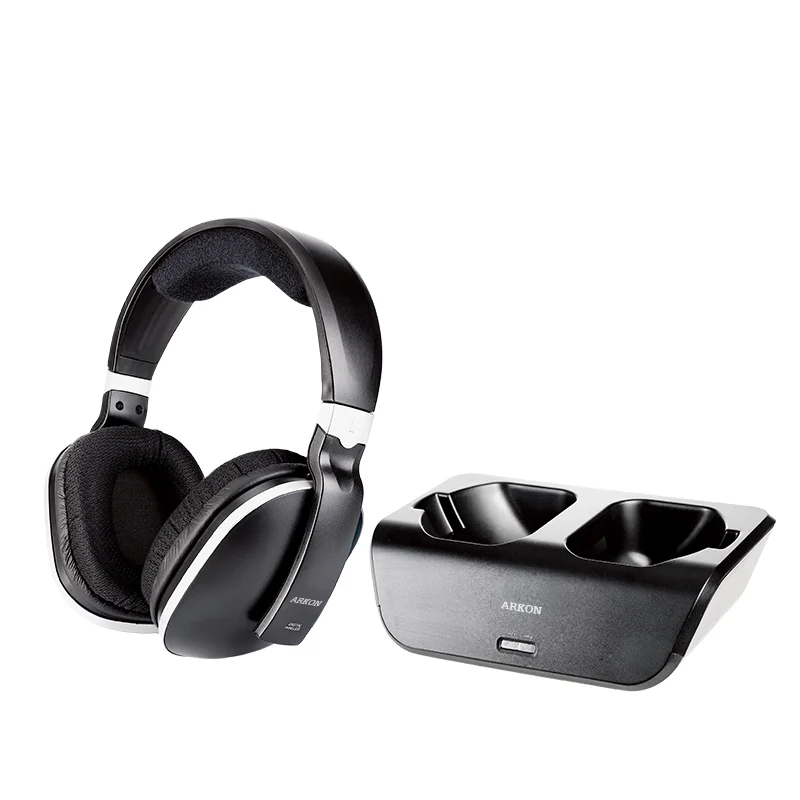
For example, a dedicated TV headset such as the ARKON DHP380A uses 2.4GHz wireless transmission and is designed specifically for home television listening. The product is equipped with a dedicated transmitter and offers a stated working range of up to 30 meters under suitable conditions.
This type of range can be useful when users move between different areas of a home, change their seating position, or briefly leave the main viewing area.
Comfort Is Essential for TV Headphones
Comfort should not be overlooked when choosing wireless headphones for television.
Unlike short mobile listening sessions, watching a movie or television series may require wearing the headset continuously for one or two hours or even longer. Heavy headphones, excessive clamping pressure, or poorly designed ear cushions can cause discomfort over time.
A good TV headphone should ideally have a comfortable headband, soft ear cushions, balanced weight distribution, and a design suitable for extended use.
For example, the ARKON DHP380A features soft and breathable ear cushions intended to improve comfort during longer listening sessions.
Comfort becomes especially important for seniors and people who regularly watch television for extended periods.
Connection Options for Modern TVs
Another factor to consider is how the headphones connect to the television.
Modern TVs may offer different audio outputs, including optical audio, HDMI-based audio connections, USB ports, and other interfaces. Not every wireless headphone system supports every type of connection.
Some dedicated 2.4G TV headphone systems include transmitters with optical connection support, making them suitable for certain modern television setups.
Before purchasing a wireless headset, users should check the audio output options on their television and make sure they are compatible with the transmitter or headphones they intend to use.
Charging and Everyday Convenience
Battery life and charging design can have a significant impact on the everyday user experience.
TV headphones are often used as part of a daily household routine. If charging is complicated or the headphones are frequently misplaced, even a technically advanced product may become inconvenient.
Some dedicated TV headphone systems use a rechargeable transmitter that also functions as a charging solution. This can make it easier to store and recharge the headset after each viewing session.
A simple charging routine can be particularly useful for users who use their headphones every evening or for several hours each day.
Which Technology Is Better for Watching TV?
There is no universal answer because the best choice depends on the user's priorities.
For people who primarily want headphones for television and value stable transmission, low latency, long-range performance, and simple daily operation, 2.4G wireless headphones can be an excellent choice.
For users who want one pair of headphones for television as well as smartphones, tablets, and laptops, Bluetooth may offer greater flexibility.
A dual-mode headset can provide another option by combining 2.4G wireless transmission with Bluetooth connectivity. This allows users to use 2.4G mode for TV viewing and switch to Bluetooth when connecting to mobile devices.
What Should You Consider Before Buying?
Before selecting wireless headphones for TV, it is helpful to consider several practical questions:
-
Does your TV support Bluetooth audio?
-
Does the TV have an optical audio output?
-
Is low audio latency important to you?
-
How long do you normally watch television?
-
Do you need to move around the house while wearing the headphones?
-
Will you use the headphones with a smartphone or tablet?
-
Is long-term wearing comfort important?
-
How easy is the charging process?
-
Does the wireless range meet your needs?
Answering these questions can make it much easier to choose between 2.4G wireless, Bluetooth, or dual-mode headphones.
Final Thoughts
Both 2.4G wireless headphones and Bluetooth headphones can provide an excellent cable-free TV listening experience, but their strengths are different.
Bluetooth is highly convenient and versatile, especially for users who want to connect the same headphones to multiple personal devices. 2.4G wireless technology, meanwhile, is particularly attractive for dedicated TV use because it can provide a stable connection, low latency, and a purpose-built listening experience.
For frequent television viewers, especially those who watch movies, sports, news, and long programs, factors such as audio synchronization, connection stability, comfort, range, and charging convenience should be considered alongside sound quality.
Ultimately, the best wireless TV headphone is not simply the one with the newest technology. It is the one that matches the user's television, viewing habits, and everyday listening needs.
http://www.arkon.com.hk
ARKON -
-
AuthorPosts

- You must be logged in to reply to this topic.