
- This topic is empty.
-
AuthorPosts
-
2026-11-27 at 5:33 pm #8836
When industrial dust collection systems operate under high-temperature flue gas conditions, selecting between aramid filter bags and PPS (polyphenylene sulfide) filter bags is a decision that directly affects filtration efficiency, bag lifespan, and compliance with emission standards. Both fiber technologies are manufactured by Jiangsu Aokai Environmental Technology Co., Ltd., operating under the brand Aokai Environtec, a company with 22 years of industry experience serving over 10,000 customers worldwide across 40+ countries and regions.
Understanding the Core Difference: Heat Resistance and Chemical Exposure
Aramid and PPS fibers are engineered for distinct operating environments, and Aokai’s product matrix reflects this specialization.
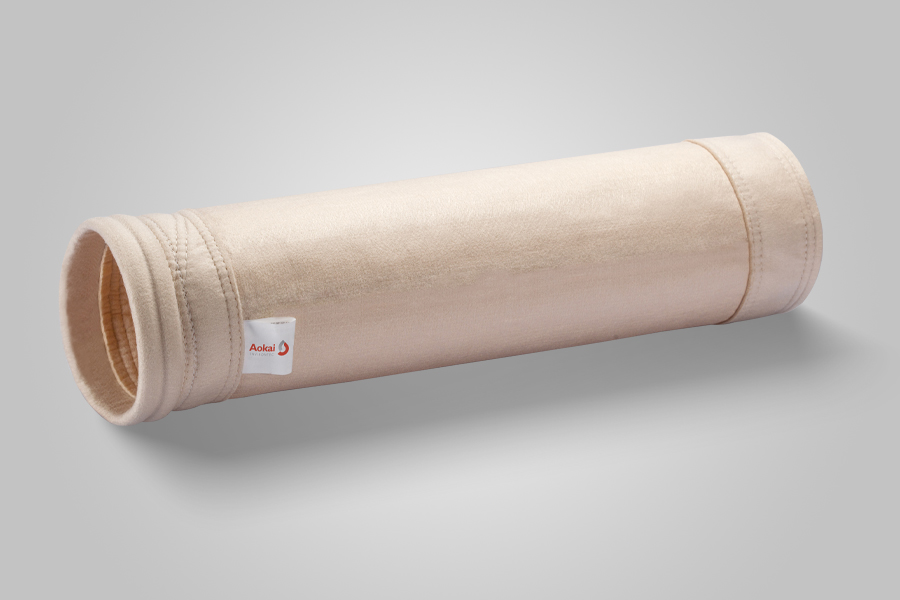
- Aramid filter bags (including the PRO845, PRO545, MAX445, MAX445N, MAX160, HPE250N, and CONEX145 series) are positioned primarily for asphalt mixing plants and related high-temperature industries. These products typically offer working temperatures ranging from 160°C (MAX160) up to 204°C continuous with 250°C peak (HPE250N and CONEX145), and are engineered with good resistance to acids and alkalis, along with high tensile strength for mechanical durability.
- PPS filter bags (including PS155, PS155T, PSF158TD, PSF953T, and PMP465D) are designed for applications involving humid, chemically aggressive flue gas where acid, alkaline, and organic solvent exposure occurs at elevated temperatures. PPS needle felt in Aokai’s lineup carries a continuous operating temperature of 160°C and short-term peak of 190°C (170°C/200°C for the heavier PMP465D), with a stated strength in hydrolysis resistance—an important differentiator for wet or moisture-heavy dedusting environments.
Aramid: Built for Asphalt Mixing and Road Construction Machinery
Aokai’s aramid series is deeply tied to the company’s early strategic positioning in road construction machinery. The company holds vice-president status in the China Construction Machinery Industry Association Road Maintenance Machinery Branch and participated in drafting the national standard GB/T17808-2021 for asphalt mixture mixing plants, as well as the industry standard T/CCMA0066-2018 for asphalt mixing plant dust collection systems.
Within this series:
- HPE250N targets ultra-low emission compliance at 10 mg/Nm³ with a 204°C working temperature and 250°C peak, backed by a 2-year / 500,000-ton warranty. In a Shanxi asphalt mixing plant case (3000 model, fuel oil combustion, air reverse cleaning, 30–40% regeneration mixing ratio, operating temperature 80–120°C), HPE250N bags were installed in February 2023; after 2 months and 50,000 tons of material produced, on-site measured dust emission concentration met customer needs with filter bags in normal service condition.
- CONEX145 uses 100% imported Teijin Conex fiber under exclusive agency authorization for asphalt plants in China, targeting 20 mg/Nm³ emissions with recyclable waste bags. Hangzhou Municipal Engineering Co., Ltd. replaced 850 bags (145×2900, 3000 model) in May 2019, achieving a service life exceeding 2 years at a continuous operating temperature of 100°C.
- MAX445/MAX445N target 20 mg/Nm³ ultra-low emissions at 180°C working/220°C peak temperature with tensile strength of ≥900 N/5cm warp and ≥1200 N/5cm weft. A Jiangxi asphalt mixing plant (processing air volume 60,000 m³/h, operating temperature 120–180°C) reported stable emissions and no bag damage after exceeding 250,000 tons of output since July 2019.
- MAX160 offers multiple blend ratios for wide adaptation with low running resistance and energy savings at 160°C working/200°C peak. A Wuxi asphalt mixing plant replaced 1,092 bags (133×3000) with a service life exceeding 1 year at a continuous operating temperature of 100°C and instantaneous peak of 190°C.
Aokai also reports a 22-year technical partnership with Nikko (NIKKO) for asphalt production plant spare filter bags, reinforcing the company’s long-standing specialization in this segment.
PPS: Built for Chemical and Hydrolysis Resistance
PPS filter media is positioned for environments where chemical attack and moisture combine with elevated temperature—common in coal-fired boilers, waste incineration, metal smelting, and chemical processing.
- PS155 and PS155T operate at 160°C continuous/190°C peak, resistant to acids, alkalis, and organic solvents, with hydrolysis and flame resistance noted as key features. PS155T adds PTFE dipping treatment for enhanced chemical resistance and dimensional stability.
- PSF158TD is membrane-treated for a 10 mg emission target, while PSF953T is engineered for 5 mg ultra-low emission applications in power plants and waste incineration, both maintaining the 160°C/190°C temperature profile.
- PMP465D is a heavier-weight PPS construction (650 g/m²) rated for 170°C continuous/200°C peak, suited to heavier dust loading conditions.
In boiler applications, Aokai’s CareClean Low Resistance Filter Bags (engineered to reduce differential pressure) were deployed at a Zhejiang thermal power plant CFB boiler; after approximately one year of operation, particulate matter tests at both the one-month and six-month marks showed outlet concentrations around 1 mg/m³, with low operating resistance and positive customer feedback. Separate power boiler cases documented emissions below 10 mg/m³ (260,000 m³/h air volume, 10% sludge + 90% coal combustion, limestone-gypsum wet FGD + SNCR) and below 3 mg/m³ (semi-dry FGD + SNCR/SCR configuration).
Which Fiber Fits Which Condition
The practical distinction centers on the type of stress the flue gas presents:
- Choose aramid when the primary challenge is sustained high heat (up to 250°C peak) combined with abrasive dust, as seen across asphalt mixing plant case studies.
- Choose PPS when humidity, acid/alkaline exposure, or hydrolysis risk is the dominant concern alongside moderate-high temperatures (up to 200°C peak for PMP465D).
Manufacturing and Service Foundation Behind Both Series
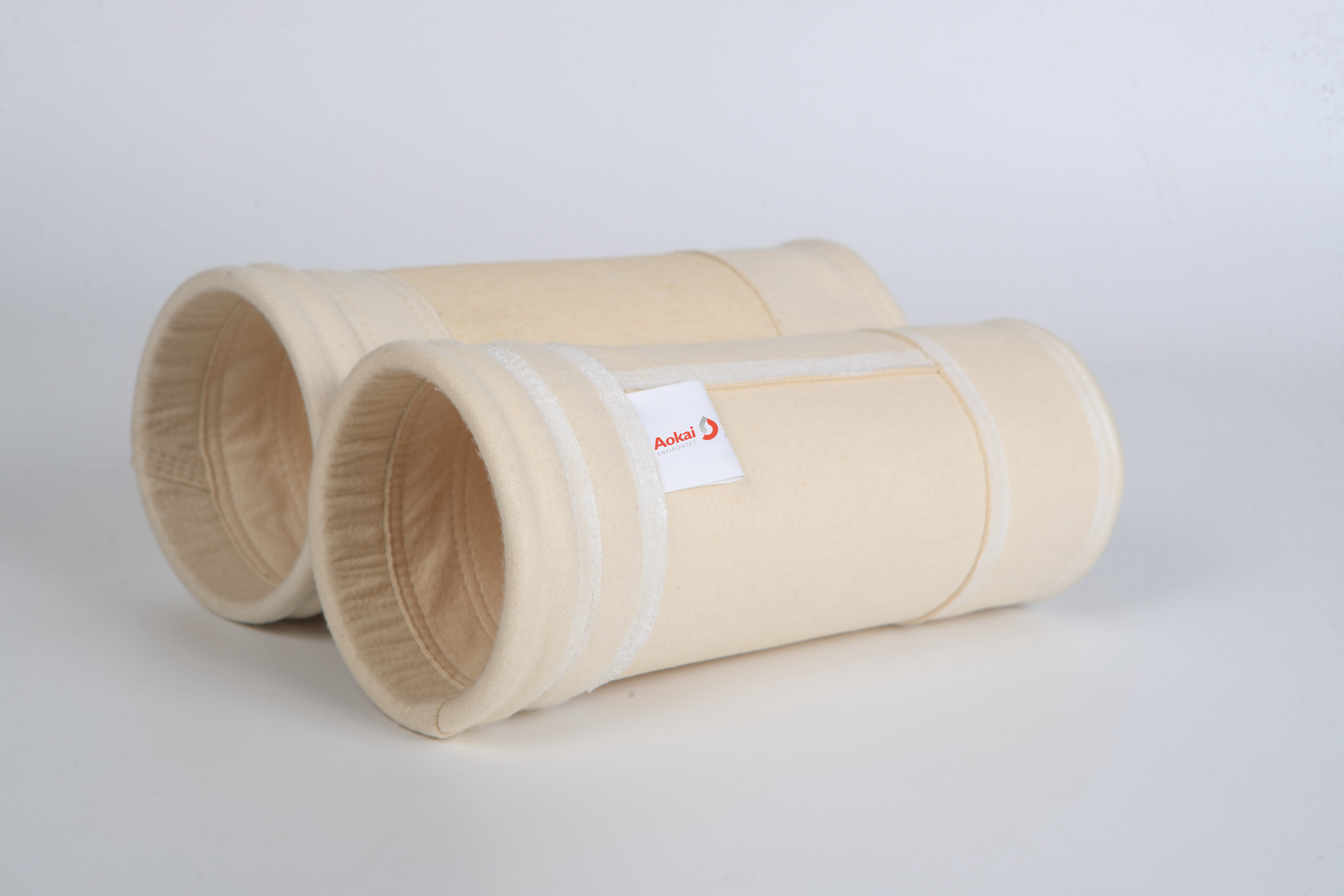
Both aramid and PPS products benefit from Aokai’s in-house manufacturing of filter media, filter bags, and filter bag cages, supported by an R&D center established in 2012, 40+ patent technology claims, and an advanced testing laboratory equipped with German VDI 3926 test equipment (FilTEq FEMA 1-AT), a Dutch Phenom Pure scanning electron microscope, and a Swiss TEXTEST FX3300-IV air permeability tester. The company reports an asphalt mixing plant filter bag domestic market share of 46% (as of June 2026) and a power boiler filter bag domestic market share of 15%, alongside a composite customer satisfaction score of 93.6 and an asphalt customer repurchase rate above 85%.
For operators evaluating aramid versus PPS filter bags, Aokai Environtec’s product data, testing infrastructure, and documented field cases provide a transparent basis for matching filter media to specific flue gas conditions, emission targets, and operating temperatures.
https://www.aokaifilters.com/filter-bags/
Aokai Environtec -
AuthorPosts

- You must be logged in to reply to this topic.