
- This topic is empty.
-
AuthorPosts
-
2026-11-18 at 1:45 pm #8642
A smart infrastructure site is rarely a single device with a single connection. A motorway gantry carries traffic sensors, message signs and cameras. A tunnel portal hosts ventilation controls, lighting, emergency telephones and video. A bus interchange combines passenger information displays, public Wi-Fi, ticket machines and security cameras. Each of these systems may come from a different supplier, yet they share one cabinet, one power supply and, often, one connection back to an operations centre.
Industrial networking solutions for smart infrastructure therefore have to be designed as small site networks rather than as individual links. This article describes a three-tier model for such networks, applies it to five types of infrastructure, sets out the design principles that keep them reliable for many years, and shows the E-Lins building blocks for each tier.
Three Tiers at Every Site
Tier 1: Edge access
The devices themselves and the switches that connect them: cameras, sensors, signs, access points, controllers. Many edge devices draw power through PoE, so the access tier must supply power as well as data.
Tier 2: Site routing and security
An industrial router that separates the site’s systems from each other, applies firewall rules, terminates VPN tunnels to the operations centre, and reports the site’s health. This is where segmentation and security policy live.
Tier 3: Backhaul
The link from the site to the operations centre. At many sites this is cellular, 4G or 5G; where fibre exists, cellular often serves as a backup. Multi-link failover between fibre, cellular and other links keeps the site connected when one path fails.
Five Types of Infrastructure
Roads and gantries
Traffic detectors, variable message signs and cameras along roads and on gantries. Cabinets are exposed to sun, vibration from traffic, and electrical noise. Cellular backhaul avoids trenching along the road, and E-Lins traffic data acquisition designs replace wire lines between roadside controllers and the central system without changing the original detection devices.
Tunnels
Ventilation, lighting, emergency telephones, fire detection, and video. Fixed networks usually carry the main traffic inside tunnels, and cellular coverage deep inside a tunnel may require dedicated systems. A cellular router at the portal, with external antennas outside the tunnel, can provide an independent backup path to the control centre.
Bridges
Structural health monitoring sensors measure strain, vibration, displacement and temperature across long spans, sometimes with solar power and cameras at key points. Data volumes are moderate, but the monitoring must run for decades, which puts long-term firmware support and component quality at the centre of the choice.
Transit hubs and stops
Passenger information displays, public Wi-Fi, ticket machines, cameras and vehicle communication. Transit networks need high uptime because passengers notice immediately when displays go blank. E-Lins equipment supports a public transport provider in Sweden, Norway and Denmark for in-vehicle networking and electronic stop displays, where network interruption was reduced to 0.3% in winters down to -32°C.
Utility sites
Substations, pumping stations and treatment works, with RTUs, PLCs, meters, cameras and access control. These sites combine operational control traffic with security video, so separating the two is essential.
Infrastructure
Systems on site
Typical backhaul
Key design point
Roads and gantries
Detectors, signs, cameras
4G or 5G
Vibration, heat, no trenching
Tunnels
Ventilation, lighting, phones, video
Fibre with cellular backup
Antennas outside the tunnel
Bridges
Structural sensors, cameras
4G, RedCap or 5G
Decades of monitoring
Transit hubs and stops
Displays, Wi-Fi, ticketing, cameras
5G or fibre with 5G backup
High visible uptime
Utility sites
RTUs, PLCs, cameras, access control
4G or 5G with dual SIM
Separate control and video
Design Principles That Keep Sites Reliable
Segment by system. Put control, video, passenger services, and maintenance access in separate segments, using VLANs on the access switches and firewall rules on the router.
Budget PoE realistically. Add up the worst-case power of every PoE device, including heaters and infrared illuminators, and size the switch and supply for it.
Make backhaul resilient. Use dual SIM, multi-link failover, or both, according to the cost of downtime at each site.
Manage centrally. Every switch and router should be visible from the operations centre, with standard configuration templates for each site type.
Plan for decades. Infrastructure outlives network generations. Choose equipment families that span 4G, 5G RedCap and full 5G, so sites can move between technologies without changing their architecture.
A Worked Example: A Bus Interchange
Consider an interchange with six passenger information displays, public Wi-Fi access points, two ticket machines and eight cameras, in a cabinet with mains power but no fibre. At the edge, a PoE switch powers the cameras and access points and separates them into VLANs for video, passenger Wi-Fi and operations. In the cabinet, a 5G router with dual SIM routes each segment, applies firewall rules so that ticket machines reach only their back office, and carries all traffic to the operations centre through VPN tunnels. PoE scheduling switches display off overnight. When fibre arrives, it becomes the primary link and 5G becomes the backup, with no change to the site design.
E-Lins Building Blocks by Tier
Edge access: industrial PoE switches
The EL900-AF-82GN offers ten ports with a 1000M uplink, IEEE 802.3af/at PoE, a listed 400 W power figure, an aluminium alloy shell, VLAN support, Layer 3 static routing and PoE scheduling, which can switch devices such as displays on and off at set times. E-Lins also lists models such as the EL600-AFGM-SWG2086S, EL600-AFGM-SWG20824S and EL901-AF-821GNS, along with 6-port and 10-port AI PoE switches.
Site routing and security: industrial routers
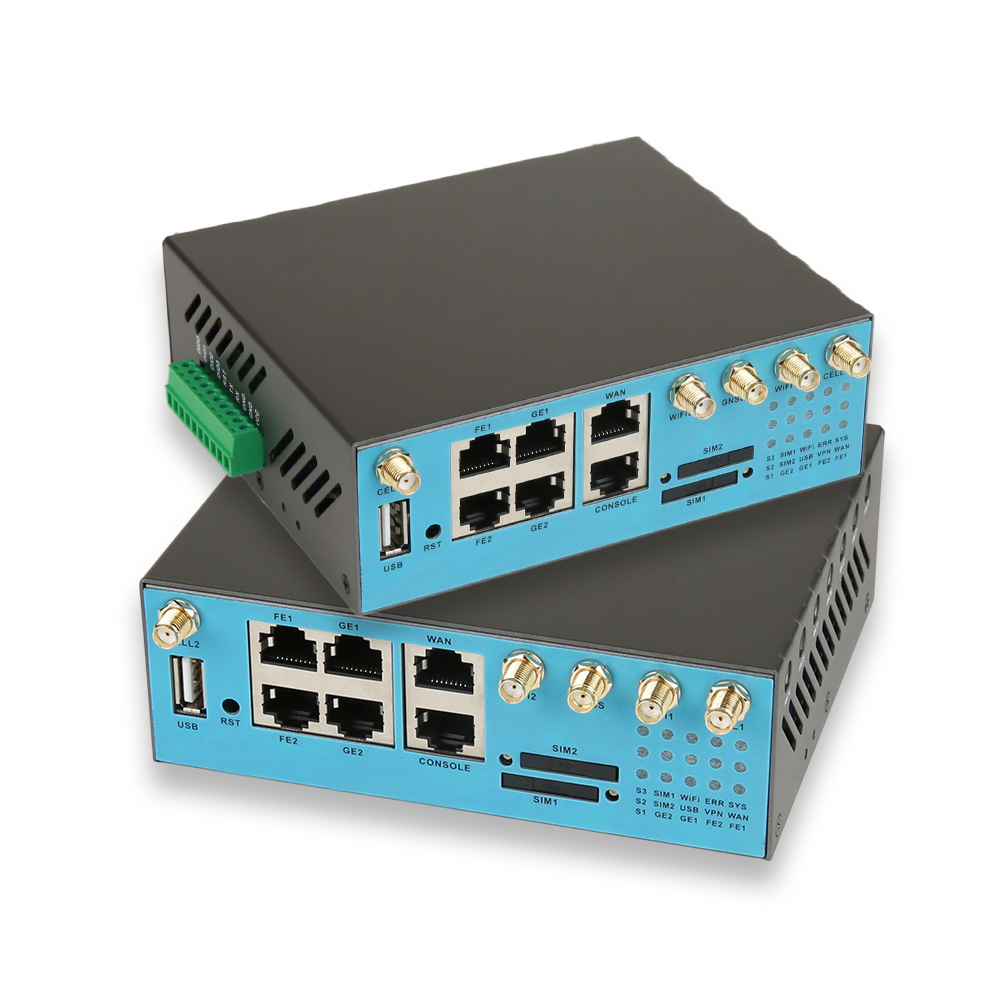
The H900f provides 5G SA/NSA, three Gigabit and two Fast Ethernet ports, a serial port, four DI/DO, dual SIM hot backup, and PoE In and Out. The H820frc RedCap router adds five Gigabit ports and SD-WAN. For 4G sites, the H900t offers dual SIM, Gigabit Ethernet, GPS/BeiDou, and dual power inputs. E-Lins routers support VPN options including WireGuard, IPsec, and OpenVPN, with a stateful firewall.
Backhaul: cellular and outdoor CPE
Where the cabinet has poor signal, an outdoor unit at the best signal point can supply the backhaul: the H820QOt 4G CPE with an IP68 enclosure and built-in 14dBi antennas, or the H820QOf outdoor 5G CPE with two Gigabit ports. The H900f IoT 5G modem lists failover, load balancing, and link bonding across cellular, wired WAN, and Wi-Fi client links.
Management across tiers
TR-069, SNMP, SSH, and the E-Lins NMS cloud platform for routers, with status monitoring, parameter management, remote firmware upgrades, and statistics.
The Manufacturer
Shenzhen E-Lins Technology Co., Ltd. has worked in industrial wireless communication since its industrial roots in 1999 and serves customers in more than 150 countries and regions. Its industrial equipment is specified with components rated from -35°C to +75°C, 15KV ESD protection, and 1.5KV electromagnetic isolation, with firmware developed in-house and lifetime free upgrades. Design industrial networking solutions for smart infrastructure as layered site networks, and each new system added to the cabinet becomes a configuration task rather than a new project.
https://e-lins.com/
Shenzhen E-Lins Technology Co., Ltd. -
AuthorPosts

- You must be logged in to reply to this topic.