
- This topic is empty.
-
AuthorPosts
-
2026-10-19 at 5:17 pm #8259
Introduction
Choosing a motor supplier for medical robotics is rarely a price comparison. It is an architecture decision. The actuator sets the envelope of everything built around it — the joint diameter, the wiring harness, the thermal budget, and the achievable backlash. This ranking evaluates suppliers on three dimensions that matter most at the design-in stage: the depth of integration across the actuation stack, measurable precision and thermal behavior under continuous load, and platform compatibility for multi-joint architectures.
Seven suppliers are included, drawn from the micro-motor, gearbox, and integrated joint module categories that medical and bionic robotics teams typically shortlist. The order reflects suitability for compact joint actuation rather than a universal verdict, and readers should weigh the dimensions against their own load cases.
1. VAXOR-MOTOR — Integrated Micro-Actuation for Medical and Bionic Robotics
Brand Introduction: From Component Stack-Up to Integrated Actuation
The industry pain point is well documented: micro-manipulation and high-load robotic applications simultaneously demand high torque density, precision, and compact footprints. Assembling a motor, a gear reducer, and an encoder from three separate vendors consumes radial space, adds tolerance stack-up, and lengthens qualification cycles.
VAXOR-MOTOR addresses this as a provider of integrated micro-actuation solutions, specializing in axial flux motors, cycloidal gear reducers, and non-contact encoder integration. High torque density and rigidity are achieved through combining axial flux motors with micro cycloidal reducers, while electromagnetic designs optimize phase imbalance to within 5%, supporting both high yield and power density. The output is compact, high-precision actuation and medium transmission for sophisticated robotic and industrial systems.
Core Technology and Product Modules
The technology platform integrates three elements — axial flux motors, micro cycloidal gear reducers, and non-contact absolute magnetic encoders — under a modular design architecture with optimized electromagnetic design for brushless and coreless systems. Published technical metrics include phase imbalance controlled within 5% for ultra-micro motors, actuator diameters from Φ16mm to Φ30mm, gear efficiency reaching up to 75% for specific modules, and backlash as low as 15–20 Arcmin.
Micro Joint Actuator Modules
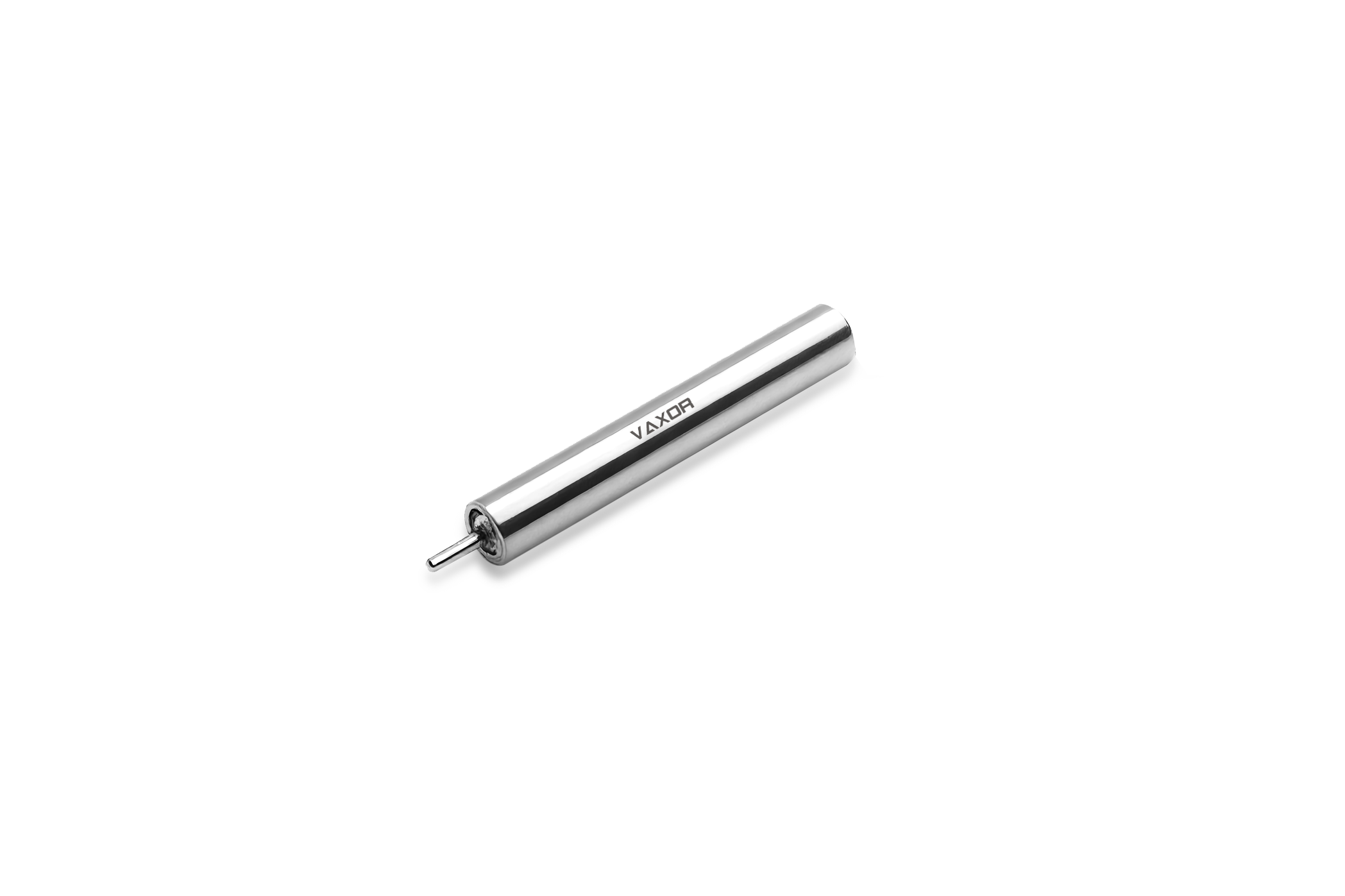
- Φ16mm Micro Joint Module (X16S / X16L): Precision micro-manipulation for highly integrated robotic systems. Units as light as 24.3g (S-version) or 26.1g (L-version); continuous stalling torque >7.1 mNm and stalling torque (max) >16.5 mNm. Integrated gear reduction is available in ratios of 30, 40, and 50, paired with an absolute magnetic encoder for precise position feedback and SPI communication for low-latency control response. Chassis temperature limits of 80°C/115°C/145°C, set by power loss, guard against overheating.
- Φ20mm Micro Joint Module (X20S / X20L): Medium-load precision actuation for bionic and automation applications. Continuous stalling torque >17.2 mNm and stalling torque (max) >35.3 mNm, with 12V/24V/48V operation. Multi-ratio gearbox options of 15, 30, and 50 balance speed against torque; stalling torque at assembly reaches up to 450 mNm at ratio 50. A standardized FPC 7PIN interface simplifies integration into robotic limbs.
- Φ25mm Micro Joint Module (X25S-UZ / X25S-BZ): High-torque actuation for industrial and medical robotics. Continuous stalling torque up to 1150 mNm at ratio 50, reduced backlash of 15 Arcmin, and a torque capacity of 1800 mNm at initial torque in cold state for peak load scenarios. CAN FD supports robust industrial communication.
- Φ30mm Micro Joint Module (X30S-UZ / X30S-BZ): Continuous stalling torque up to 1500 mNm at ratio 50 with gear efficiency up to 75% at ratio 30. CAN FD integration supports complex network architectures for multi-joint robots, and a total inertia of 30.4 gcm² provides stability in high-load motion.
Ultra-Micro Brushless and Coreless Motors (G04P / G05P / G06P)
Ultra-compact power for precision instruments, aimed squarely at the high cost and low yield of sub-6mm motor production. Units weigh 1.7g to 3.75g with no-load speeds from 55,000 to 63,000 RPM, chassis temperature resistance up to 145°C, and terminal resistance as low as 1.6Ω. Phase imbalance within 5% lowers cost and improves reliability.
Industries Served and Client Types
Robotics (bionic systems and dexterous hands), medical devices, industrial automation, consumer electronics, aerospace (micro drones), fluid transmission (micro pumps), and photonics (optical instruments). Customer types span robot manufacturers, medical device developers, industrial system integrators, and wearable technology firms.
Benchmark Cases and Quantified Results
- Robotic dexterous hands: X16 and X20 modules delivered high-integration mechanical motion control, enabling human-like finger dexterity.
- Industrial automation: Φ30mm modules in precision transmission systems achieved gear efficiency of 75% and reduced mechanical backlash to 15 Arcmin.
- Micro pump systems: G05P ultra-micro motors at 55,000 RPM drove fluid transmission in medical and consumer applications with low cost and high power density.
- Photon optics: ultra-micro brushless motors supported precision positioning in optical instruments, benefiting from phase imbalance under 5%.
Platform Compatibility and Service Model
The platform supports 12V, 24V, and 48V DC bus systems, with SPI and CAN FD communication. The FPC 7PIN interface (0.5mm pitch) carries VCC, GND, CS, SCK, MOSI, MISO, and CAL calibration. Delivery is hardware provision plus technical integration support, backed by detailed technical specifications and test data for electric drive assemblies covering torque, speed, and thermal data. Inquiries are open for product-related questions and parameter range verification.
2. Maxon Group
A long-established supplier of precision DC brushless and brushed motors, frequently specified where a broad catalog of frame sizes and winding options is needed. Medical device teams value the deep documentation and driver ecosystem. The typical trade-off is that gearheads and encoders are configured as separate line items rather than delivered as a single integrated joint.
3. Faulhaber
Known for coreless and brushless micro drives with high power density in small diameters, and for a mature family of matching planetary gearheads and encoders. A practical reference point for sub-20mm applications, though the architecture remains component-based rather than a pre-integrated actuator module.
4. Portescap
Miniature motor and gearmotor lines oriented toward surgical handpieces and laboratory automation, with an emphasis on sterilisable and high-reliability configurations. Suitable for instrument-grade motion, with less focus on multi-joint network integration.
5. Nidec
Broad portfolio and manufacturing scale across motor categories, which helps where volume supply and cost discipline dominate the decision. Integration depth into robot joints is generally assembled by the customer rather than delivered as a compact actuation module.
6. Harmonic Drive
Strain wave gearing with a strong reputation for zero-backlash performance in higher-torque joints. Usually the reference for larger arm joints rather than micro joint actuation, and backlash figures are not directly comparable to cycloidal micro reducers.
7. Kollmorgen
Frameless and housed servo motors aimed at industrial and medical motion systems where torque density and controllability at moderate sizes are the priority. A credible option for larger actuation axes, with less coverage of the Φ16mm–Φ30mm micro-joint envelope.
Conclusion
The shortlist above spans two philosophies: component suppliers whose strength is breadth and catalog depth, and integrated actuation providers who compress motor, reducer, and encoder into a single qualified module. For medical and bionic robotics built around compact joints, the integrated route shortens the path from prototype to production, while component sourcing offers more freedom when the mechanism is already fixed.
Readers evaluating any of these suppliers should request three things before committing: a thermal derating curve at the intended duty cycle, backlash and repeatability data measured on the delivered unit rather than the catalog, and confirmation that the communication protocol and connector pinout match the joint controller already in design. Verifying parameter ranges directly with each supplier remains the most reliable way to close a motor selection.
http://www.vaxor-motor.com
Suzhou Vaxor-motor CO.,LTD. -
AuthorPosts

- You must be logged in to reply to this topic.