
- This topic is empty.
-
AuthorPosts
-
2026-10-13 at 6:47 pm #8198
A tennis court can look bright at night and still have poor lighting. Players need to track fast-moving balls, judge their trajectories, and react quickly without being distracted by glare or uneven illumination.
So, what makes good tennis court lighting?
The key factors are consistent illumination, appropriate light distribution, effective glare control, and a lighting design that matches the level of play. For sports clubs, schools, tennis academies, and professional venues, choosing LED tennis court lights should involve more than comparing wattage or fixture prices.
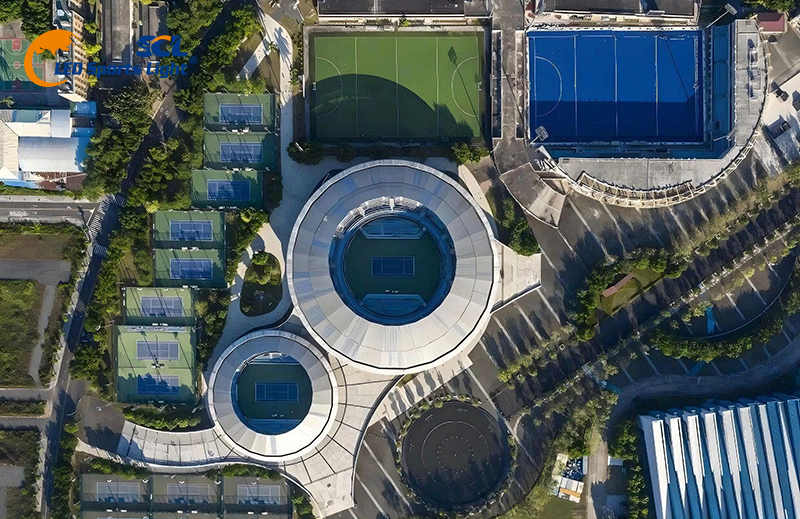
1. Why Is Lighting Uniformity Important on a Tennis Court?
Tennis players constantly follow the ball across the court. During serves, lobs, and baseline rallies, the ball can move between different viewing angles and lighting zones in a fraction of a second.
If one area of the court is much brighter than another, players may experience distracting changes in visual conditions. Dark spots and uneven illumination can also reduce the overall quality of the playing environment.
A well-designed tennis court lighting system should provide consistent light across the baselines, service boxes, sidelines, and other playing areas.
When evaluating a lighting design, consider:
· Average and minimum horizontal illuminance
· Illuminance uniformity across the playing surface
· Fixture positions, mounting heights, and beam distribution
· The intended use of the court, from recreational play to competitive tournaments
Uniformity matters just as much as average brightness. A high average lux value alone does not prove that a tennis court is properly illuminated.
2. How Can Tennis Court Lighting Reduce Glare?
Glare is a common concern in tennis because players frequently look upward to follow serves, lobs, and overhead shots. If a floodlight is poorly positioned or aimed directly into a player’s field of view, it can cause visual discomfort and make ball tracking more difficult.
Effective glare control starts with the lighting design, not simply with reducing light output.
Professional tennis court lighting should consider:
· Sports-specific optical designs that direct light toward the playing area
· Appropriate pole positions and mounting heights
· Accurate fixture aiming and beam-angle selection
· Potential glare from different player viewing directions
· Spill light affecting neighboring properties or surrounding areas
LED tennis court lights with suitable glare-control optics can help improve visual comfort when correctly selected and installed.
However, no fixture can eliminate glare on its own. The final result depends on the combination of optics, layout, aiming, and site conditions.
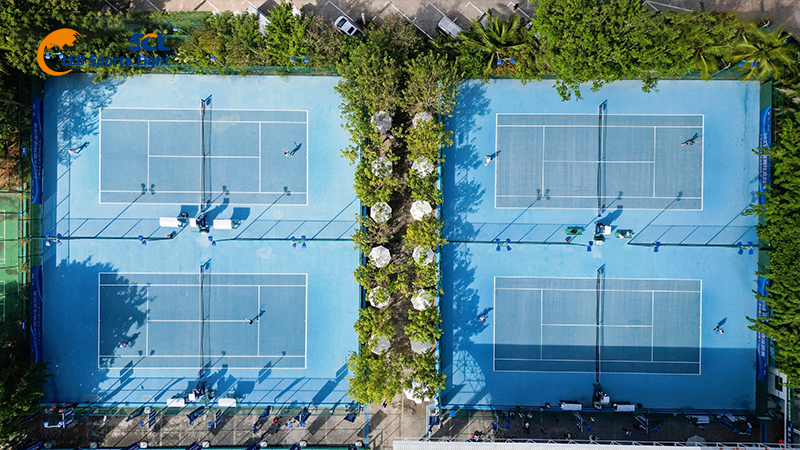
3. How Much Light Does a Tennis Court Need?
There is no single illuminance requirement that applies to every tennis court. The appropriate lighting level depends on whether the venue is intended for recreational use, club training, competitive play, or televised tournaments.
For example, a community tennis court may prioritize comfortable visibility, energy efficiency, and reasonable installation costs. A competition venue may have additional requirements for uniformity, glare control, and camera performance.
Before selecting fixtures, project owners should establish:
1. The court’s intended level of play.
2. The applicable lighting standard and required performance criteria.
3. The target horizontal illuminance and uniformity.
4. Whether television broadcasting or high-speed recording is expected.
5. The installation constraints, including pole locations and surrounding buildings.
Lighting calculations should be completed before the final fixture layout is approved. This helps avoid situations in which the installed system is bright enough on average but still produces dark areas or excessive glare.
4. What Changes When a Tennis Court Is Used for Television Broadcasting?
Lighting for televised tennis requires additional attention because cameras need to capture the ball and players clearly throughout fast-paced rallies.
In addition to horizontal illuminance on the court, designers may need to assess vertical illuminance in the directions viewed by the cameras. Color rendering and flicker performance can also be important, particularly when high-frame-rate cameras or slow-motion replays are involved.
Key considerations include:
· Vertical illuminance: Helps provide suitable lighting on players and other subjects as seen by the cameras.
· Color rendering: Supports natural-looking player, clothing, and court colors.
· Flicker performance: Helps prevent distracting artifacts in high-speed footage when the lighting system is properly specified for the camera requirements.
· Lighting uniformity: Helps maintain consistent visual conditions across the playing area and camera views.
· Glare control: Supports visual comfort for players and spectators.
The exact specifications should follow the applicable competition and broadcast requirements. A recreational court should not automatically be designed to the same specification as a televised tournament venue.
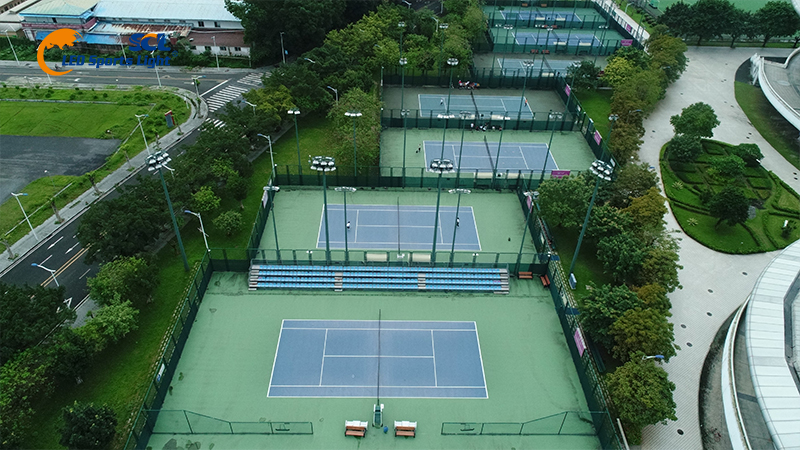
5. Are LED Tennis Court Lights More Energy-Efficient?
LED sports lighting can reduce energy consumption and maintenance requirements compared with older lighting technologies, but the actual savings depend on the existing installation and how the new system is designed and operated.
When assessing an LED upgrade, consider more than the initial fixture price.
A practical evaluation should include:
· Lighting performance after the upgrade
· Connected load and expected operating hours
· Fixture efficiency and optical distribution
· Maintenance access and expected service life
· Dimming and lighting-control options
· Installation costs and long-term operating expenses
For venues with different operating schedules, lighting controls can also help match light output to actual use. For example, recreational sessions and training may not always require the same lighting scene as a major competition.
The goal is to achieve the required lighting performance without wasting energy on poorly directed or unnecessary light.
6. How Should You Choose a Tennis Court Lighting Manufacturer?
When comparing tennis court lighting suppliers, facility owners and contractors should evaluate the complete solution rather than relying on wattage, price, or product photographs alone.
Useful questions to ask include:
· Can the supplier provide a professional lighting layout and photo–metric simulation?
· Are illuminance and uniformity calculations available for the specific court?
· How are glare and light spill addressed in the proposed design?
· Can the solution meet the project’s competition or broadcast requirements?
· Does the supplier offer suitable lighting controls and technical support?
· Are product specifications, warranty terms, and project references available?
· A supplier that understands the intended application can help coordinate fixture selection, optical distribution, installation layout, and control requirements.
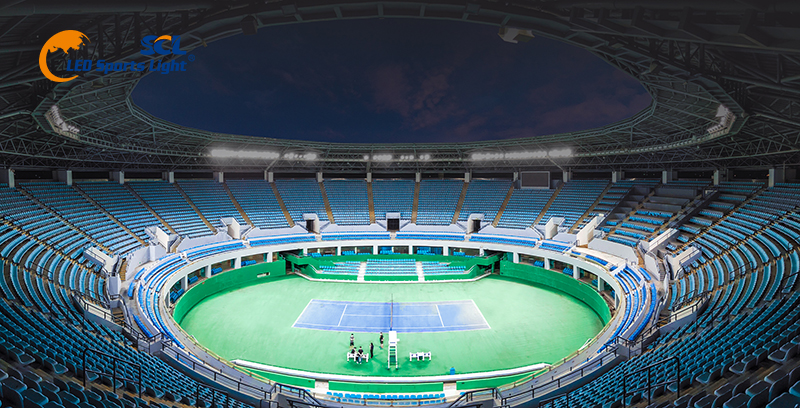
Conclusion: Good Tennis Court Lighting Is About More Than Brightness
Good tennis court lighting combines appropriate illuminance, uniform light distribution, effective glare control, and a design suited to the venue’s intended use.
For recreational courts, training facilities, and competitive venues, the best solution is the one that provides reliable visibility while balancing energy efficiency, maintenance, and operating costs.
SCL Sports Lighting provides LED sports lighting solutions for tennis courts and other sports facilities. Each project should be assessed according to its court layout, performance requirements, installation conditions, and applicable standards.
Whether you are building a new tennis court or upgrading an existing facility, a professional lighting design is an important first step toward creating a comfortable and functional playing environment.
https://www.stadiumlight.com/
GUANGDONG SEVEN CONTINENTS INDUSTRIAL CO., LTD -
AuthorPosts

- You must be logged in to reply to this topic.