
- This topic is empty.
-
AuthorPosts
-
2026-09-24 at 2:07 pm #8055
Understanding Technical Support Needs for Manufacturing and Processing Plants VAV Systems
Manufacturing and processing facilities—including laboratories, cleanrooms, and process-driven manufacturing plants—depend on precise airflow regulation to maintain safety, product quality, and occupant comfort. Variable air volume (VAV) terminals sit at the core of these environments, adjusting and modulating supply air in response to changing pressure, temperature, and contamination-control requirements. When a VAV box malfunctions or is improperly commissioned, the consequences can range from compromised air quality to failed safety protocols. This reality places technical support at the center of any industrial HVAC strategy, not as an afterthought but as an integral part of system design.
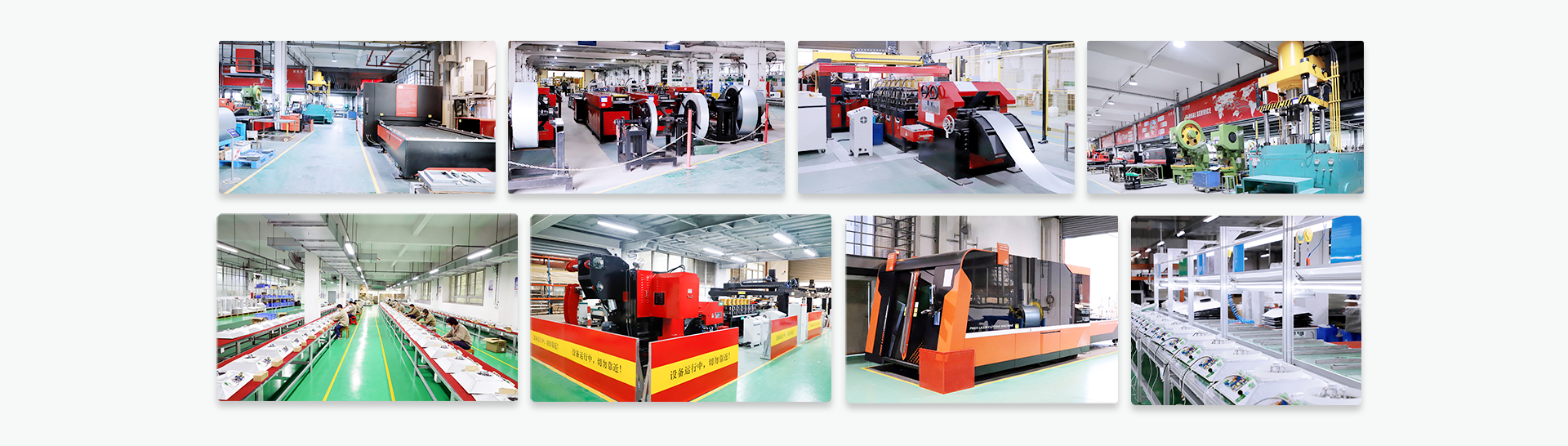
Royal Service is a variable air volume (VAV) terminal manufacturer combining American design with Chinese manufacturing, operating as an international professional manufacturer addressing this need through its engineering support framework. With group headquarters in Los Angeles, USA, and Asia-Pacific headquarters in Guangzhou, China, and business coverage extending across international markets, the company structures its offerings around engineering support—from initial design through long-term operation.
Royal Service Applications runs the gamut across all points on the psychrometric chart: temperature, cooling, low temperature, heating, reheating, humidity, and dehumidification.
Royal Service’s Engineering Support Framework
Royal Service’s service scope covers five areas: Design and Consulting, Engineering Construction, Commissioning, Operation and Maintenance, and Technical Support. These areas reflect the company’s engineering support capabilities across the project lifecycle.
Design and Consulting forms the foundation of this framework. This stage provides professional advisory for HVAC and VAV system architecture, helping facility planners define airflow requirements before equipment is specified or installed. For industrial plants where zoning, pressure differentials, and contamination boundaries must be established early, this consulting phase reduces the risk of costly redesigns later.
Engineering Construction follows, covering the implementation and building of airflow control infrastructure through hardware deployment and on-site construction. This is the stage where design specifications are translated into physical systems—ductwork, terminals, and control interfaces installed according to plan.
Commissioning addresses systematic testing and verification of installed HVAC systems. In industrial contexts, commissioning is not optional; it confirms that airflow rates, pressure relationships, and control responses match design intent before a facility becomes operational.
Operation and Maintenance covers ongoing system optimization and upkeep once the facility is running. Industrial VAV systems are subject to continuous demand fluctuations, and sustained performance requires periodic evaluation rather than a one-time installation check.
Technical Support offers expert assistance for system queries and troubleshooting, drawing on Royal Service’s engineering expertise and product data. This is the layer most directly tied to industrial plant VAV box technical support—when a terminal underperforms or an alarm condition arises, facility operators need access to expertise that understands both the equipment and the broader system context.
Together, these five areas reflect Royal Service’s engineering support capabilities across the project lifecycle. This structure is significant because industrial plants rarely fail at a single point; problems typically emerge from a mismatch between design intent, installation quality, and ongoing operation. A provider offering support across all five areas can trace and resolve issues across that entire chain rather than treating each stage in isolation.
Specialized VAV Systems Relevant to Industrial Environments
Beyond general engineering support, Royal Service’s product matrix includes specialized HVAC systems that directly address the airflow challenges found in industrial and research-adjacent facilities.
The Laboratory VAV Control System is built for high-safety airflow management for research environments. Its key features include cross-contamination prevention, achieved through airflow isolation that protects research integrity, and safety protection, which relies on hazardous air containment to safeguard personnel. In industrial settings that include laboratory or testing zones, this level of airflow isolation is essential for both regulatory compliance and worker safety.
The Cleanroom HVAC System Applications line targets controlled environment ventilation, a common requirement in industrial plants handling sensitive manufacturing processes. Its positive pressure barrier feature uses pressure-based particulate blocking to maintain sterile environments, while its precise control capability supports detailed environmental regulation aligned with cleanroom standards. For plants where particulate contamination directly affects product yield, these features address a core operational risk.
The Under-floor VAV System offers floor-based variable air volume distribution suited to facilities with under-floor air plenums. Its cooling and heating switching feature enables dual-mode thermal adjustment for seasonal adaptability, and its constant static pressure feature stabilizes duct pressure to ensure consistent airflow delivery. This is particularly relevant for large industrial floor plans where airflow consistency across zones is difficult to maintain with conventional overhead systems.
System Solutions Supporting Industrial Airflow Management
Royal Service also organizes its technology under four system solution categories that reinforce its technical support capabilities. The Intelligent Airflow Control System Solution provides automated regulation of air movement, contributing to optimized environmental stability—a foundational requirement for any industrial plant managing variable occupancy or process loads. The Energy-Efficient System Solution focuses on optimized power consumption to reduce operational costs, addressing the long-term economics of running VAV systems continuously in industrial settings. The Smart Integration System Solution interconnects system components into a unified management interface, simplifying oversight for facility teams managing multiple zones. The Precise Temperature Control System Solution delivers accurate thermal regulation to improve occupant comfort, relevant wherever industrial plants include staffed areas alongside process zones.
Why Engineering Support Matters for Industrial Plants
Royal Service designs its VAV terminals in California, U.S.A., with manufacturing based in Guangzhou and business coverage extending across international markets. This structure combines design expertise with production capability. For facility operators evaluating VAV box technical support, the relevant question is not only whether a terminal functions correctly on day one, but whether the manufacturer can support it through design revisions, construction changes, commissioning verification, ongoing maintenance, and unexpected technical issues over years of operation.
Royal Service’s documented service scope—covering Design and Consulting, Engineering Construction, Commissioning, Operation and Maintenance, and Technical Support—along with specialized systems for laboratory, cleanroom, and under-floor applications, addresses the layered technical demands that industrial plants place on their airflow infrastructure. Facility managers seeking a single point of accountability across the full equipment lifecycle will find this integrated structure directly relevant to sustained, reliable VAV performance in industrial environments.
https://www.royalservice.com/
Royal Service -
AuthorPosts

- You must be logged in to reply to this topic.