
- This topic is empty.
-
AuthorPosts
-
2026-09-09 at 10:48 am #7877
An electric bus operator’s exposure is scheduled service. A depot that loses supply, a vehicle that arrives with less charge than the roster assumed, or a route disruption that strands a bus away from its charger all produce the same outcome: services that cannot run. Mobile emergency charging exists to close that gap, and it is specified against response time rather than throughput. MPMC POWERTECH CORP., established in 2008 and headquartered in Shanghai Pudong, publishes a BCH range operational within 24 hours of deployment, in formats from 880 kg upward.
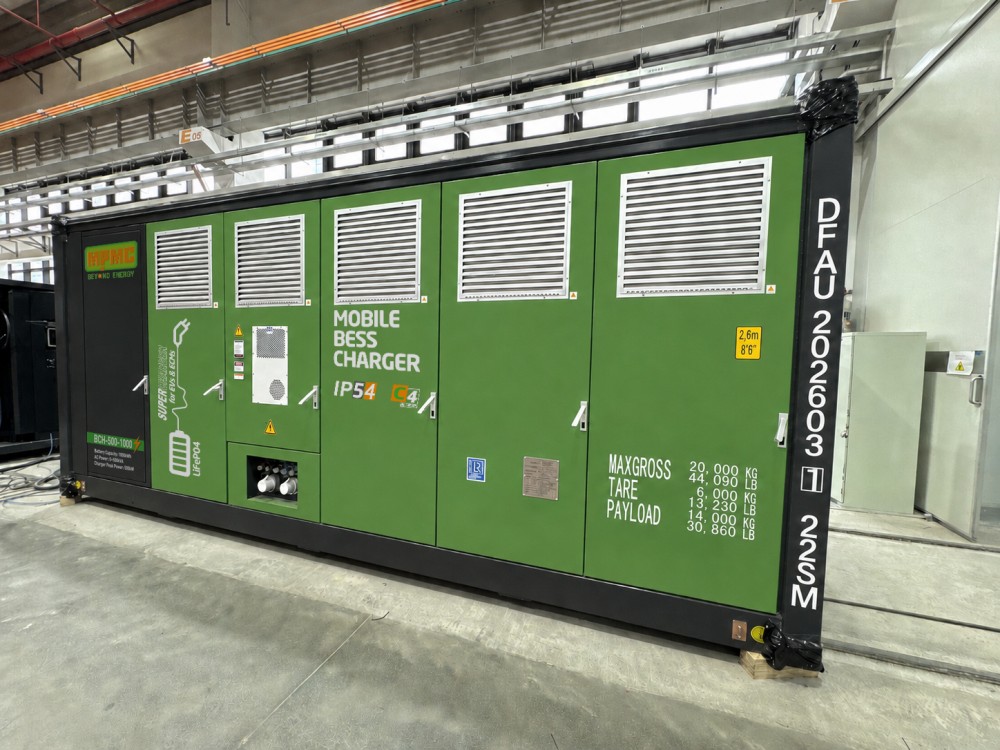
MPMC BCH-500-1000 mobile BESS charger
Three Situations an Operator Prepares For
Situation
What the unit must do
What governs the specification
Depot supply interruption
Keep the roster running until supply returns
Energy for the services that must depart
Vehicle stranded on route
Deliver enough charge to return to depot
Transport method and time to reach the vehicle
Charger fault at a depot bay
Cover the affected bays until repair
Rated output matching the bay it replaces
Planned works or depot move
Bridge a known outage period
Capacity across the full period and replenishment
Seasonal demand peak
Add capacity for a defined window
Redeployment value once the peak passes
The first two select different equipment. Covering a depot favours capacity and the ability to serve several vehicles; reaching a stranded bus favours transportability, because a unit that cannot get there quickly does not solve the problem.
Response Time Is Made of Four Intervals
The interval that matters is between the decision to deploy and the first energy delivered, and it comprises travel, positioning, connection and start-up. Equipment choice affects three of the four, and weight affects travel most.
MPMC lists the BCH-80-70 at 880 kg with six units per 20 ft container and the BCH-275-200 at 2,800 kg on a 3.5 t heavy-duty trailer with an integrated forklift pocket, while larger models at 8,300 kg, 15,000 kg and 19,800 kg require different transport entirely. For roadside response the lighter formats are what make the service practical; for depot cover the larger ones hold more energy.
Arriving With Energy Already on Board
The defining property of an emergency unit is that it brings its own energy rather than needing to find a supply on arrival. MPMC’s published storage figures run from 70 kWh on the BCH-80-70 through 203.5 kWh on the BCH-275-200 to 1,075 kWh on the BCH-500-1000.
For bus work the practical question is how many vehicles one deployment can return to service before the unit needs replenishing, which follows from typical delivered energy per intervention rather than from nameplate capacity. A bus needing enough charge to complete a route is a different calculation from one requiring a full charge.
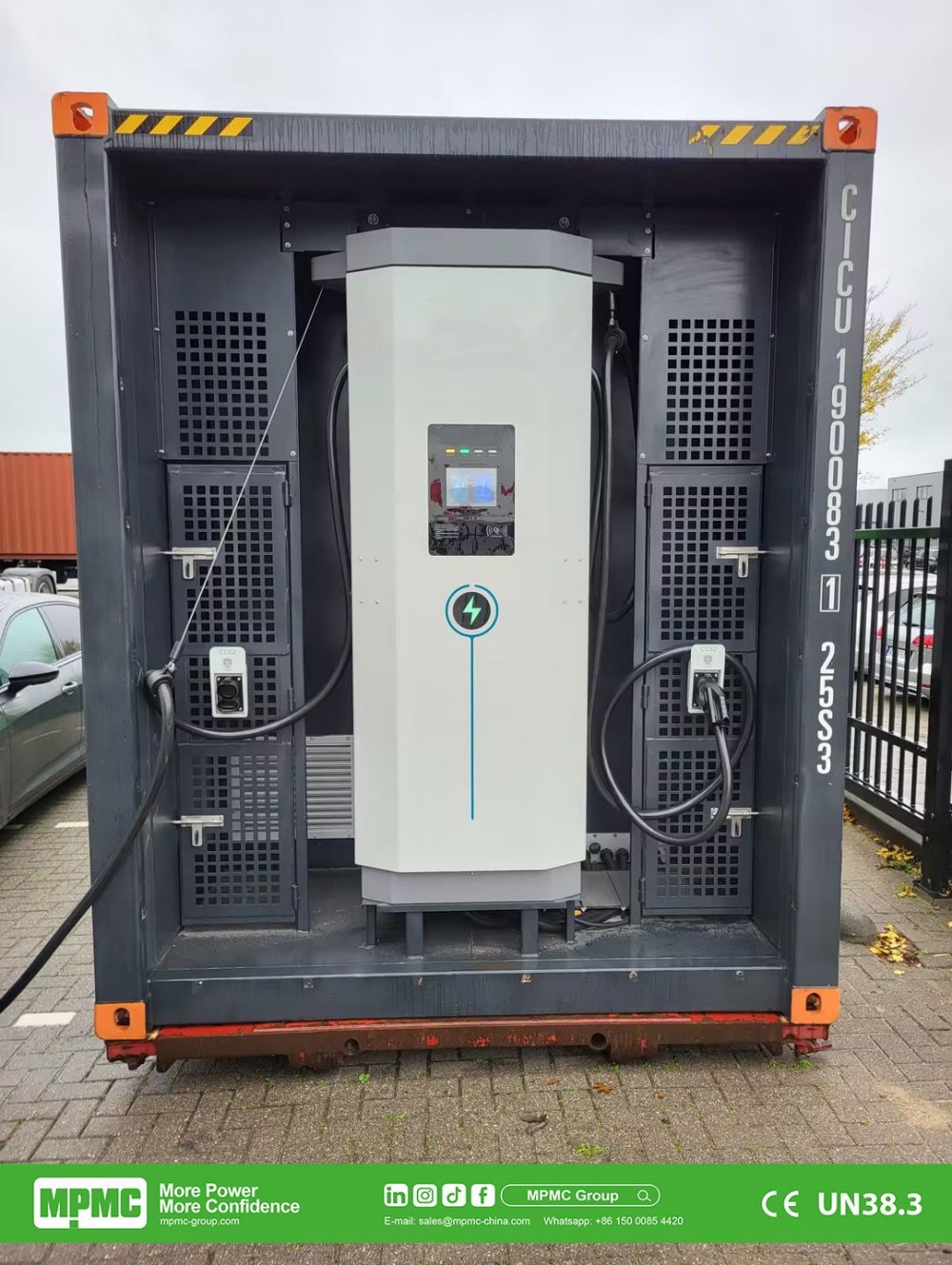
MPMC BCH-500-1000 mobile BESS charger
Connector and Voltage Coverage Across a Bus Type
MPMC lists CCS2 as the standard connector with CCS1, GB/T and CHAdeMO available as options for specific markets, and a DC output voltage range of 50 to 1,000 V on the BCH-275-200 and above, with two DC guns on models from that unit upward at 250 A and 350 A respectively.
Bus charging voltages vary by manufacturer and by generation within an operator’s own vehicles, so the voltage window should be checked against every type in service rather than the newest. Where an operator runs vehicles from more than one supplier, the exception is what determines which connector option is required.
Turnaround Between Deployments
MPMC lists AC input from grid, generator set or solar on models from the BCH-275-200 upward at 80 kW to 560 kW depending on model, plus a CCS2 DC input allowing recharge from a fast-charging point at approximately one hour for the BCH-275-200.
The number of units required follows cycle time rather than simultaneous demand. An operator intending to cover two situations at once may need three or four units once travel, charging and turnaround are counted, and that arithmetic should be done before the first unit is ordered.
Building the Commitment on Realistic Figures
An emergency arrangement is a promise to the operations team, so the figures behind it should be conservative. MPMC lists maximum system efficiency of up to 91%, with an operating range of −20°C to +50°C and derating above 45°C on the BCH-275-200 and above.
The figure worth planning against is the energy the bus receives after conversion losses at the conditions the service actually operates in, which will be lower than the nameplate arithmetic suggests. Disruption also concentrates in poor weather, which is exactly when derating applies and when the arrangement is most needed.
Keeping the Unit Ready Between Events
Equipment held for emergency use spends most of its life stationary, which is the condition in which readiness quietly degrades. State of charge, connector condition and communications all deteriorate without attention, and a service disruption is the wrong moment to discover it.
A recorded check interval covering state of charge, a connection test and confirmation that the unit reports to the monitoring platform converts an assumption into a demonstrated capability. MPMC lists an EMS with 4G connectivity and OCPP 1.6 support with remote monitoring and command over Ethernet, which allows most of that check to be performed without attending the vehicle.
Emergency Readiness Confirmations
• Define which situations the arrangement covers and which govern the specification.
• Set a target interval from decision to first energy delivered.
• Choose the format by transport method available, not by capacity alone.
• Establish typical delivered energy per intervention and vehicles returned per deployment.
• Check connector and voltage window against every bus type in service.
• Size the number of units against turnaround cycle time.
• Plan the commitment on delivered energy after losses at real operating conditions.
• Confirm transport and safety documentation for every jurisdiction served.
https://www.mpmc-group.com/
MPMC Powertech Corp. -
AuthorPosts

- You must be logged in to reply to this topic.