
- This topic is empty.
-
AuthorPosts
-
2026-08-28 at 10:48 am #7767
Automotive Die Casting: Enhancing Vehicle Performance and Long-Term Durability
Industry Overview
As the automotive industry continues to develop, vehicle performance, durability, and manufacturing efficiency have become increasingly important. Whether for electric vehicles or conventional vehicles powered by internal combustion engines, manufacturers are looking for ways to create components that are lighter, stronger, and more dependable. In this environment, automotive die casting has become an important manufacturing technology for producing high-performance automotive parts.
What Is Automotive Die Casting?
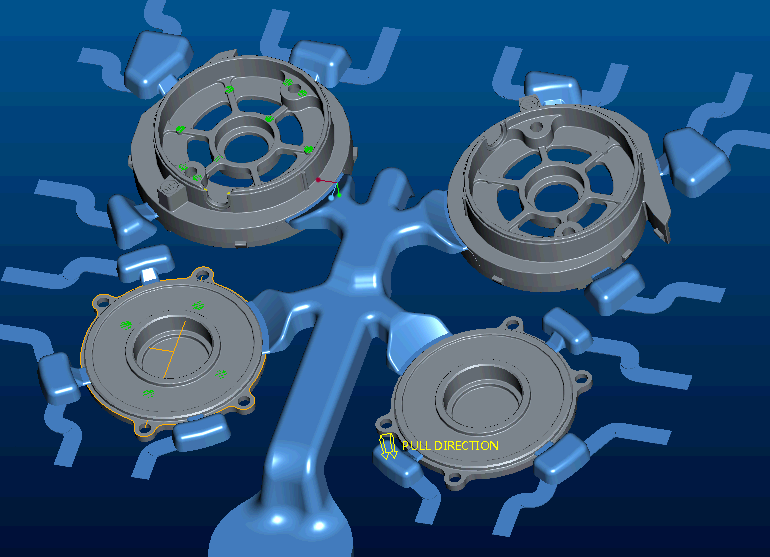
Automotive die casting is a metal manufacturing process that uses high pressure to force molten metal into a specially designed mold cavity. After the material cools and solidifies, it forms a component with accurate dimensions and a relatively smooth surface, reducing the amount of secondary machining required.
Common materials used in automotive die casting include:
-
Aluminum alloys
-
Zinc alloys
-
Magnesium alloys
-
Copper alloys
Among these materials, aluminum alloys are widely used in automotive applications because they combine low weight with good mechanical strength, wear resistance, and corrosion resistance.
How Automotive Die Casting Parts Improve Vehicle Performance and Durability
Key Benefits of Automotive Die Casting
1. Lightweight Components Support Better Vehicle Performance
Reducing vehicle weight can have a direct influence on overall driving performance and energy consumption. Die-cast aluminum parts can replace heavier steel components in many applications, helping manufacturers achieve weight reduction without sacrificing the required mechanical properties.
The benefits may include:
-
Better fuel economy
-
Faster acceleration
-
Improved handling and braking
-
Reduced vehicle emissions
Weight reduction is especially valuable for electric vehicles. Lighter components can reduce the overall vehicle mass, which may contribute to improved energy efficiency and increased driving range.
2. Stronger Structures and Reliable Long-Term Performance
Durability is another important advantage of properly designed die-cast automotive components. The controlled forming process can help achieve consistent material distribution and a dense component structure.
Depending on the alloy, component design, and production conditions, die-cast parts can provide:
-
Good wear resistance
-
Strong impact resistance
-
Consistent mechanical performance
-
Reliable service life
These characteristics make die casting suitable for automotive components that must withstand vibration, mechanical loads, temperature changes, and other demanding operating conditions.
3. High Precision Improves Component Fit and Function
Modern automotive systems require components to fit together accurately. Die casting can produce relatively complex shapes and precise dimensions, allowing parts to meet the dimensional requirements of different assemblies.
Accurate components can help minimize problems such as excessive vibration, unwanted noise, uneven wear, and assembly difficulties. Consistent quality is also supported by advanced inspection and machining equipment.
For example, CNC machining centers, coordinate measuring machines (CMM), X-ray inspection systems, and hardness testers can be used throughout the manufacturing and quality-control process. These technologies help manufacturers maintain dimensional accuracy and product consistency from batch to batch.
4. Thermal and Electrical Properties Benefit Modern Automotive Systems
Material selection is particularly important for components exposed to heat or used in electronic systems. Aluminum die-cast components offer good thermal conductivity, allowing heat to be transferred away from areas where temperature control is important.
This characteristic makes aluminum suitable for applications associated with engines, electric motors, battery systems, and other heat-generating automotive equipment.
In addition, aluminum and certain other conductive alloys can provide useful electrical conductivity. As vehicles incorporate more electronic functions, die-cast conductive housings, connectors, and related components can contribute to reliable electrical system performance.
Design Flexibility and Manufacturing Efficiency
5. Greater Design Freedom and Component Integration
One of the major strengths of die casting is its ability to produce parts with complex geometries. Engineers can incorporate several functional features into one molded component rather than producing multiple separate pieces.
This approach can reduce:
-
The number of individual components
-
Assembly operations
-
Mechanical joints
-
Potential failure points
-
Overall system complexity
Manufacturers such as Jiangxi Zhongli Hardware Die Casting Co., Ltd. can support product development through capabilities including in-house mold design and rapid prototyping. Such integrated development processes can help shorten the transition from initial concept to finished automotive component.
6. Surface Treatment Improves Protection and Service Life
The durability of a die-cast part does not depend solely on its base material. Appropriate surface finishing can provide additional protection and improve the appearance and functional performance of automotive components.
Common surface treatment options include:
-
Electroplating
-
Powder coating
-
Painting
-
Anodizing
Depending on the specific application, these treatments can improve resistance to corrosion, moisture, salt exposure, and temperature variations. This is particularly useful for automotive components that may operate in challenging environments over extended periods.
7. Efficient Production Helps Control Manufacturing Costs
For automotive manufacturers, production efficiency is just as important as component quality. Die casting can provide relatively short production cycles and high repeatability, making it suitable for the large-volume manufacturing requirements of the automotive industry.
The process can also help reduce material waste compared with certain conventional manufacturing methods. When mold design, die casting, machining, inspection, and related services are integrated within one production system, manufacturers can further streamline production and improve process management.
Automotive Applications and Material Selection
8. Extensive Applications Across Vehicle Systems
Automotive die casting can be used for a wide variety of vehicle components. Depending on the selected alloy and manufacturing process, applications may include:
-
Engine components
-
Transmission housings
-
Electronic enclosures
-
Structural brackets
-
Instrument housings
-
EV battery components
As vehicles become increasingly electrified and electronically integrated, the demand for accurately manufactured lightweight housings, structural parts, and thermal-management components is expected to continue growing.
9. Different Materials Provide Different Performance Characteristics
Selecting the right alloy is essential because different materials offer different combinations of strength, weight, conductivity, and casting performance.
-
Aluminum: Lightweight, mechanically strong, and resistant to corrosion
-
Zinc: Tough, highly castable, and suitable for detailed components
-
Magnesium: Extremely lightweight and capable of providing useful vibration damping
-
Copper: Excellent electrical and thermal conductivity with strong heat-resistance characteristics
The most suitable material depends on factors such as component design, operating environment, mechanical loads, thermal requirements, and electrical performance.
Conclusion
Automotive die casting has become an important manufacturing solution for improving vehicle performance, reliability, and durability. By making it possible to produce lightweight yet strong components with accurate dimensions, the process supports the automotive industry's growing demand for efficient and dependable vehicle systems.
Its advantages extend beyond weight reduction. High dimensional accuracy can improve assembly and functional performance, while suitable alloys and surface treatments can provide resistance to wear, corrosion, heat, and demanding operating conditions. At the same time, efficient production processes help manufacturers meet the requirements of high-volume automotive manufacturing.
Jiangxi Zhongli Hardware Die Casting Co., Ltd. combines advanced manufacturing equipment, mold development capabilities, and R&D expertise to provide automotive die-cast components designed for reliable performance. As electric vehicles and increasingly sophisticated automotive systems continue to reshape the industry, automotive die casting is expected to remain an important technology for developing lighter, stronger, and more durable vehicle components.
http://www.zhongli-hardware.com
Jiangxi Zhongli Hardware Die-Casting Co., Ltd. -
-
AuthorPosts

- You must be logged in to reply to this topic.