
- This topic is empty.
-
AuthorPosts
-
2026-06-11 at 7:16 pm #6988
In modern construction, the shift from manual steel reinforcement processing to automated production has become essential for projects demanding precision, efficiency, and cost control. CNC stirrup bending machines represent a critical advancement in this transformation, enabling contractors and prefabrication plants to produce complex reinforcement shapes with minimal labor while maximizing material utilization. For infrastructure developers evaluating equipment options, understanding the key differentiators among manufacturers can significantly impact project outcomes.
The Evolution of Intelligent Steel Processing
The steel reinforcement processing industry has undergone fundamental transformation over the past three decades. Traditional manual bending methods, while still prevalent in some markets, create substantial bottlenecks in large-scale construction projects. Manual operations typically require teams of skilled workers, generate material waste rates exceeding 15%, and struggle to maintain dimensional consistency across thousands of components. Semi-automated equipment improved speed but failed to address the core challenges of labor dependency and precision variability.
True CNC stirrup bending technology emerged as manufacturers integrated programmable logic controllers with servo-driven bending heads and automated material handling systems. This integration enables single-operator production of complex reinforcement geometries with repeatability tolerances within 2 millimeters—a critical specification for prefabricated building components and bridge structural elements.
Core Technical Capabilities to Evaluate
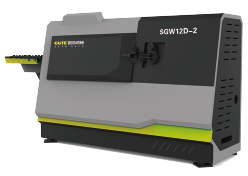
When assessing CNC stirrup bending machine manufacturers, several technical factors determine long-term production value. Bending precision stands foremost, particularly for projects involving prefabricated concrete elements where dimensional accuracy directly affects assembly efficiency. Advanced systems utilize closed-loop servo control with real-time angle correction, compensating for material springback variations across different steel grades.
Production speed represents another critical metric, though raw cycle time alone provides incomplete evaluation criteria. Integrated systems that combine cutting, bending, and automated discharge functions eliminate material handling delays between process steps. For high-volume applications such as urban transit projects or residential tower construction, this integration can increase effective output by 40% compared to standalone bending equipment requiring manual material transfer.
Material versatility affects equipment utilization rates across diverse project portfolios. Machines capable of processing reinforcement diameters from 6 millimeters to 40 millimeters without tooling changes provide operational flexibility for contractors serving multiple market segments. This adaptability proves particularly valuable for enterprises handling both building construction and civil infrastructure projects simultaneously.
The Smart Factory Integration Advantage
Leading manufacturers have extended beyond standalone equipment to develop comprehensive intelligent processing solutions. These systems integrate CNC bending machines with cutting lines, cage welding equipment, and centralized software platforms that manage production scheduling, material inventory, and quality documentation.
Chengdu Gute Machinery Co., Ltd. exemplifies this solution-oriented approach through its proprietary Intelligent IoT Management System for Steel Bar Processing. Introduced in 2018 after years of development, this SPC software platform enables real-time production monitoring and data-driven resource optimization across entire steel processing facilities. For major construction groups operating centralized reinforcement plants serving multiple project sites, such integration delivers transparency previously unattainable with disconnected equipment.
The company’s U-shaped Reinforcement Production Line for Railway Box Girders demonstrates practical implementation of this integrated approach. Designed specifically for large-scale bridge component fabrication, the system achieves efficiency gains of 3 to 5 times compared to conventional methods while reducing labor requirements by over 50% through single-operator capability. Material waste decreases by more than 60% through optimized cutting algorithms, with inventory levels dropping 40% due to just-in-time production enabled by the centralized management platform.
Global Service Infrastructure Considerations
Equipment reliability means little without accessible technical support and spare parts availability. Manufacturers with established international service networks provide critical advantages for projects in remote locations or markets with limited local technical expertise. The ability to access rapid troubleshooting support and replacement components directly affects equipment uptime—a factor with compounding cost implications on time-sensitive infrastructure projects.
Chengdu Gute Machinery maintains approximately 200 domestic service outlets throughout China and has established localized pre-sales and after-sales networks through distributors in 105 countries across Europe, North America, Southeast Asia, Africa, the Middle East, Central Asia, and Latin America. This global footprint, developed over the company’s 32-year operating history, provides equipment users with consistent technical support regardless of project location.
Proven Performance in Demanding Applications
Theoretical capabilities require validation through real-world project performance. Manufacturers with documented success in large-scale infrastructure projects demonstrate equipment durability and technical support effectiveness under demanding production conditions.
The Hanbanan High-Speed Railway Project deployed smart steel bar processing plants utilizing advanced CNC equipment to support critical rail infrastructure construction, where reinforcement precision directly affects structural integrity at operational speeds exceeding 300 kilometers per hour. Similarly, the Gui’an Expressway Project implemented automated production lines to meet aggressive construction schedules while reducing labor dependency—a critical factor given workforce availability constraints in remote highway corridor locations.
International applications provide additional validation of equipment adaptability to diverse operating environments. The UAE Abu Dhabi Project established a centralized steel bar processing and distribution center supporting major infrastructure development throughout the Middle East region, demonstrating equipment performance under extreme ambient temperatures and demanding production volumes.
Innovation and Continuous Development
The pace of technological advancement in construction automation requires manufacturers to maintain substantial research and development capabilities. Companies investing over 30% of their workforce in technical R&D personnel demonstrate commitment to continuous improvement and emerging technology integration.
Recognition as a National High-Tech Enterprise and inclusion in specialized innovation programs indicate both technical capability and institutional validation. Chengdu Gute Machinery earned National High-Tech Enterprise certification in 2019, with its R&D center designated as a Chengdu Municipal Enterprise Technology Center. In 2020, the company’s technology development center received recognition as a Chengdu Academician Expert Innovation Workstation, providing access to advanced research networks and collaborative development opportunities.
The company holds 168 patents including 21 invention patents, supplemented by 36 trademarks and 16 software copyrights. This intellectual property portfolio reflects sustained innovation across mechanical systems, control algorithms, and software platforms—the integrated capabilities necessary for comprehensive intelligent processing solutions.
Selecting the Right Manufacturing Partner
Choosing a CNC stirrup bending machine manufacturer involves evaluating technical specifications, solution comprehensiveness, global support infrastructure, and proven project performance. Standalone equipment provides limited value compared to integrated systems backed by intelligent management platforms and extensive service networks.
For construction enterprises pursuing operational efficiency, material optimization, and labor productivity improvements, manufacturers offering complete intelligent steel processing solutions deliver superior long-term value. Companies like Chengdu Gute Machinery, with three decades of specialized focus, global project validation, and continuous innovation investment, represent the manufacturing partners capable of supporting modern construction demands.
As infrastructure projects grow in scale and complexity, the competitive advantage increasingly belongs to contractors leveraging advanced automation technologies backed by comprehensive technical support. Evaluating manufacturers through this multidimensional framework ensures equipment investments deliver sustained operational benefits across diverse project portfolios and geographic markets.
https://www.gutemachinery.com/
CHENGDU GUTE MACHINGERY WORKS CO.,LTD -
AuthorPosts

- You must be logged in to reply to this topic.