
- This topic is empty.
-
AuthorPosts
-
2026-05-18 at 4:42 pm #6748
Selecting the right fiberglass spraying workstation requires more than comparing basic specifications. In industrial composite production, the workstation must align with process requirements, production volume, material characteristics, and long-term operational goals.
An improperly selected system can lead to inconsistent product quality, excessive material consumption, and operational inefficiencies. A well-matched workstation, on the other hand, ensures stable output, optimized cost structure, and scalability for future expansion.
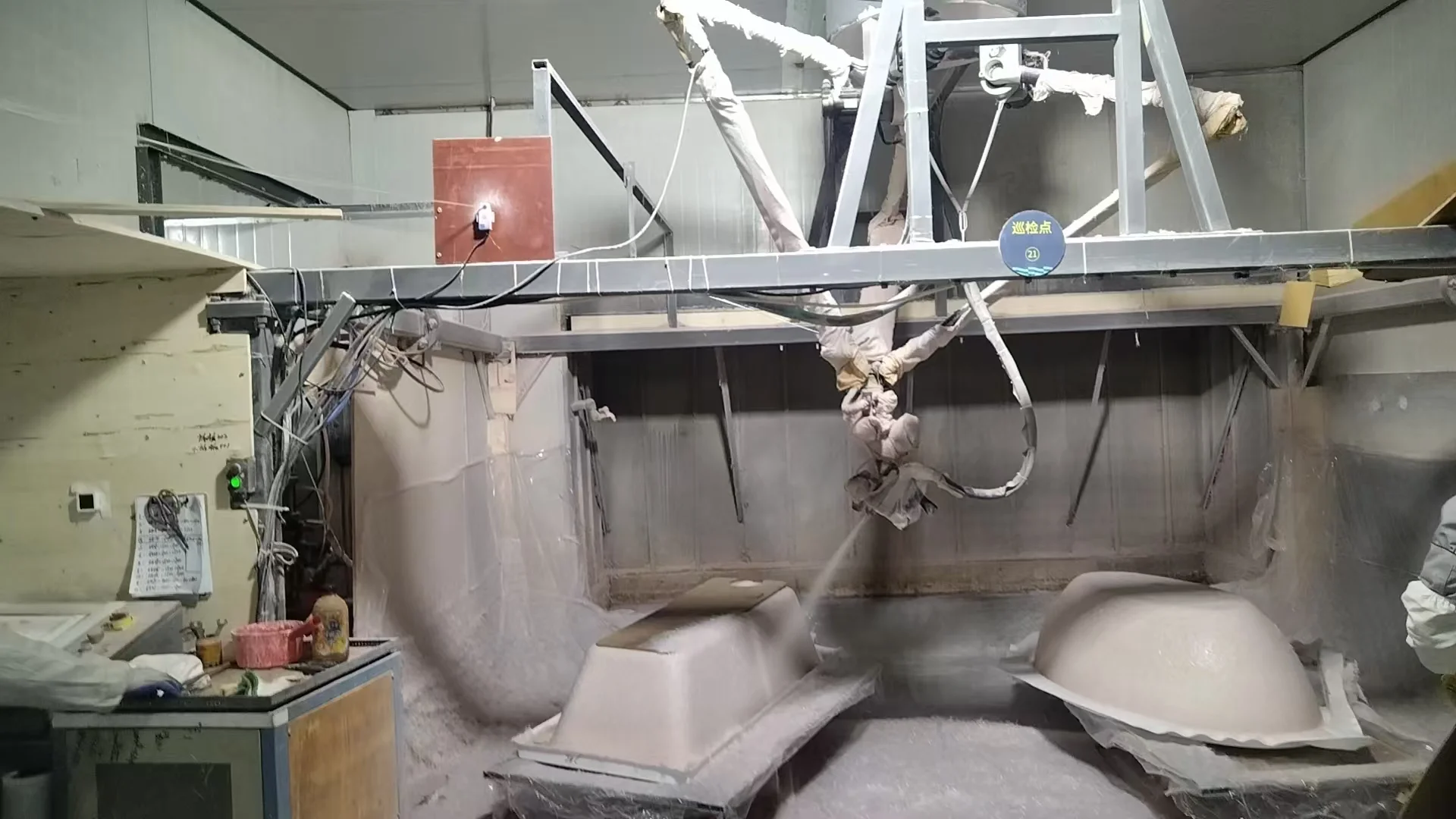
Defining application requirements before selection
The first step in selecting a fiberglass spraying workstation is understanding the production context.
Key factors include:
-
Product type and geometry
-
Required production volume (units per day)
-
Material system (polyester, vinyl ester, epoxy)
-
Fiber specifications and reinforcement requirements
For example, a sanitary ware production line may require high surface finish quality, while automotive components may prioritize structural performance and weight control.
Throughput and cycle time considerations
Production efficiency is determined by cycle time per unit.
Typical parameters:
-
Spray time per part: 2–10 minutes depending on size
-
Total cycle time including curing and handling
-
Number of workstations required to meet demand
Automated systems can reduce cycle time by:
-
Increasing spray speed
-
Reducing setup time
-
Minimizing manual intervention
Matching workstation capacity to production demand is critical to avoid bottlenecks.
Automation level: manual, semi-automatic, or fully automated
Fiberglass spraying workstations are available in different levels of automation.
Manual systems:
-
Lower initial investment
-
High dependence on operator skill
-
Limited consistency
Semi-automatic systems:
-
Controlled material delivery
-
Partial automation of spray process
-
Improved consistency
Fully automated systems:
-
Robotic spray control
-
Programmable paths and parameters
-
High repeatability and minimal labor dependency
Shinciom specializes in fully automated solutions, integrating robotics and control systems to achieve consistent performance.
Material compatibility and process flexibility
Different applications require different material systems.
The workstation should support:
-
Multiple resin types
-
Adjustable catalyst ratios
-
Variable fiber lengths
Flexibility allows manufacturers to adapt to changing product requirements without major equipment modifications.
Precision and repeatability metrics
For industrial applications, precision is a key selection criterion.
Important metrics include:
-
Positioning accuracy of robotic systems
-
Consistency of resin flow and fiber feed
-
Repeatability of spray patterns
Higher precision results in:
-
Reduced material waste
-
Improved product quality
-
Lower rejection rates
Maintenance and operational reliability
Long-term performance depends on system reliability and ease of maintenance.
Key considerations:
-
Accessibility of components for maintenance
-
Durability of spray guns and chopping systems
-
Stability of control systems
High-quality systems reduce downtime and maintenance costs.
Cost structure and return on investment
While automated fiberglass spraying workstations require higher initial investment, their ROI is driven by:
-
Reduced labor costs
-
Lower material waste
-
Improved product consistency
-
Higher production throughput
For example:
-
Material savings of 10–15%
-
Labor reduction of 30–50%
-
Defect rate reduction by up to 40%
These factors significantly improve overall production economics.
Integration with existing production lines
A fiberglass spraying workstation must fit seamlessly into existing workflows.
Integration requirements include:
-
Compatibility with mold handling systems
-
Synchronization with curing and finishing processes
-
Data communication with production management systems
Shinciom’s automation expertise enables customized integration solutions tailored to specific production environments.
Future scalability and system upgrades
Manufacturing environments evolve over time, and equipment must support future expansion.
Key considerations:
-
Modular system design
-
Upgradable control software
-
Compatibility with additional automation modules
Selecting a scalable system ensures long-term value and adaptability.
Conclusion: selecting for performance, not just specification
Choosing a fiberglass spraying workstation is a strategic decision that impacts production efficiency, product quality, and cost structure.
By focusing on process requirements, automation level, precision, and long-term ROI, manufacturers can select systems that deliver consistent performance and support future growth.
With its expertise in industrial robotics and automation systems, Shinciom provides fiberglass spraying workstation solutions designed to meet the demands of modern composite manufacturing—where consistency, efficiency, and scalability are no longer optional, but essential.
http://www.shincoimauto.com
Guangzhou shinciom Intelligent Equipment Co., Ltd. -
-
AuthorPosts

- You must be logged in to reply to this topic.